




How AI Can Support Structured Bronchoscopy Training for Clinicians
 September 23, 2026
 244


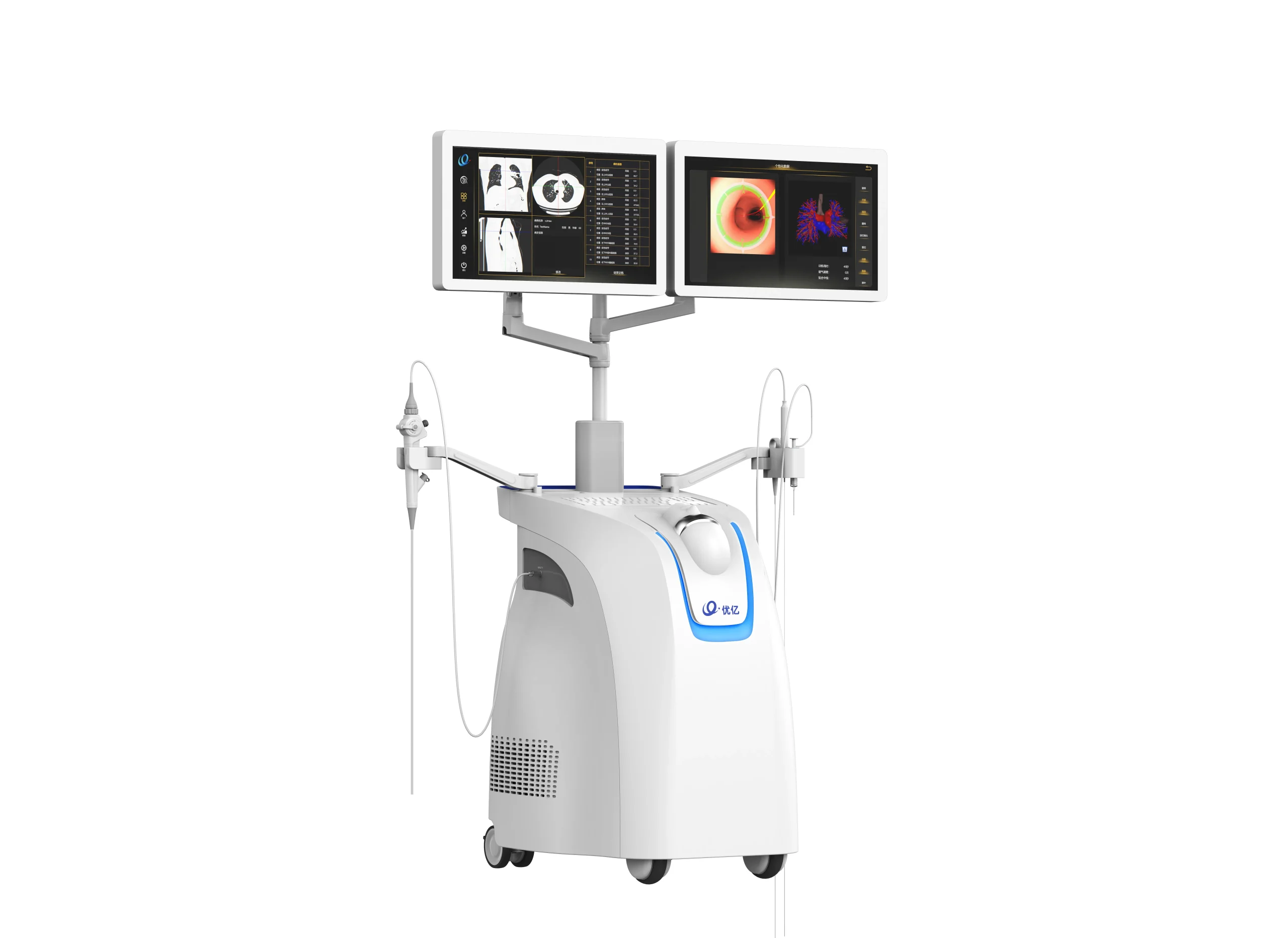
The most useful role of AI in doctor training is not to replace clinical educators or decide who is competent. Its value is to make procedural practice more structured: define a task, record what happened, analyze the attempt, preserve a training history and give instructors a clearer basis for planning the next supervised session. In bronchoscopy education, this model is especially relevant because skill development combines instrument handling, anatomical navigation, scenario progression and repeated practice. An AI-enabled simulator can support that learning loop when the curriculum, assessment method and instructor-review process are defined before the technology is deployed.
Where Does AI Fit in Doctor Training?
AI training for doctors works best when AI occupies a clearly defined place in the training workflow. In a procedural simulation program, that place is usually between practice and educator review.
The workflow can be expressed as:
Training objective → simulation task → recorded procedural performance → AI-supported assessment → historical record → instructor review → next supervised training task.
This is different from asking AI to decide whether a doctor is clinically competent. Competency decisions depend on institutional requirements, faculty judgment, supervised clinical experience and other evidence outside the simulator. The simulator contributes structured information to that process; it does not replace the process.
Step 1: Start With Defined Clinical Training Tasks
A doctor training AI program should begin with curriculum design, not with software features. The training team first needs to identify the procedural skills that must be practiced and the order in which they should become more difficult.
UE Medical’s Bronchoscope Simulation AI Plus provides five current simulation modes: Basic Exploration, Basic Diagnosis, Advanced Diagnosis, Therapeutic Procedures and Personalized Training. That structure is useful because it gives a training center several levels around which a curriculum can be organized.
The training team should still decide what each level means locally. For example, basic exploration may be used to establish orientation and handling familiarity, while advanced or therapeutic modes may be introduced only after the institution’s educators decide that the learner is ready for more complex tasks. The simulator provides the scenario structure; the education program defines the learning pathway.
Step 2: Use Simulation to Create Repeatable Practice Before Clinical Application
One advantage of AI in medical training is the ability to repeat a procedural scenario without depending on a particular live clinical case being available at that moment. Repetition allows the learner to practice the same class of task again, compare attempts and become familiar with the sequence of actions inside a controlled training environment.
For bronchoscopy, physical realism matters because the trainee is not learning from a screen alone. UE Medical’s simulator uses a soft-silicone anatomical platform with both nasal and oral approaches, plus a control handle designed to reproduce the handling characteristics of EBUS bronchoscopes and a range of diagnostic and therapeutic instruments.
This creates a useful division of responsibility: the simulator provides a repeatable procedural environment, while clinical supervisors and institutional policies determine how simulator practice relates to later supervised patient-side training.
Step 3: Turn AI Assessment Into Measurable Training Records
The phrase AI medical training becomes meaningful only when the AI function produces information that educators can actually use. The verified Bronchoscope Simulation AI Plus product description states that, based on PCCM assessment criteria, AI automatically evaluates, records and analyzes procedural performance.
That means the system supports more than immediate feedback. Because records are retained, a training team can compare sessions rather than treating each attempt as an isolated event.
The useful educational question is not “What score did the trainee receive?” but “What does the recorded pattern show across repeated training?” A single result may be affected by one session. A series of records can provide a more useful view of consistency and change over time.
Step 4: Use Historical Performance to Plan the Next Session
UE Medical’s current product information states that historical training records can be reviewed to analyze performance trends and optimize future training plans. This is one of the strongest links between medical training AI and an actual education workflow.
The record becomes useful when it influences the next supervised learning decision. An instructor may review whether a trainee is progressing consistently through basic tasks, whether performance changes after repeated practice, or whether another session at the same level is appropriate before moving to a more complex scenario.
AI does not need to prescribe the next clinical action. Its role can remain narrower: provide a structured performance history that makes educator review more evidence-based and less dependent on memory alone.
AI Should Support Faculty Review, Not Replace It
| AI / Simulator Can Support | Educator or Institution Still Controls |
|---|---|
| Repeatable simulation scenarios | Curriculum design and learning objectives |
| Automated evaluation within the product’s assessment framework | Interpretation of results in the local training program |
| Recording of procedural performance | Decision to repeat, advance or modify supervised training |
| Historical performance review | Competency judgment and credentialing requirements |
| Structured practice environment | Clinical supervision and patient-care authorization |
This distinction is important for ai training for healthcare professionals. AI can make training data more structured, but it should not be described as an independent authority for clinical readiness unless a specific validated use and governance framework supports that claim.
Physical Fidelity and Digital Assessment Need to Be Evaluated Together
A training system can have sophisticated assessment software and still be a poor fit if the physical task does not match the intended clinical skill. Conversely, a realistic anatomy model can support practice but offer limited value for longitudinal education if no training records are retained.
For bronchoscopy programs, the more complete evaluation is therefore:
anatomical platform + instrument handling + scenario progression + AI assessment + historical records + instructor review.
UE Medical’s system combines those elements in one workstation. The product page also lists dual 23-inch Full HD displays with 10-point multi-touch capability, which is relevant when a hospital is deciding how the simulator will be used in a teaching room or clinical skills center.
How Should a Hospital or Training Center Evaluate Deployment?
A hospital evaluating ai in doctor training should look beyond the simulator itself and examine how the training station fits the education program.
Curriculum Fit
The available scenarios should map to the procedures and trainee levels the institution actually teaches. More scenarios are not automatically better if they do not match the program.
Assessment Workflow
Educators should review what the AI system evaluates, how results are displayed, and how historical records are retrieved for debriefing.
Instructor Use
The training team should define who reviews results, how performance trends are interpreted and how those findings influence the next training session.
Physical Setup
The institution should review workstation size, display arrangement, accessory storage and the physical training platform to ensure the system fits the intended simulation space.
Training Governance
The hospital should define how simulator performance relates to its own supervised training, competency review and credentialing processes.
A Bronchoscopy Training System Should Be Evaluated as a Workflow
UE Medical’s Bronchoscope Simulation AI Plus is best understood as a training workflow rather than a single AI feature. The verified product structure links scenario practice, anatomical simulation, scope-style handling, AI-based assessment and historical training records.
That makes it relevant to buyers searching broadly for ai in doctor training or ai training for doctors, but the article boundary should remain clear: the system is designed around bronchoscopy simulation and procedural training, not generic medical education across every specialty.
Hospitals can also review UE Medical’s pulmonary solutions to understand how the simulator relates to the company’s wider bronchoscopy and visualization product environment.
What Should a Clinical Training Center Include in an RFQ?
The RFQ should describe the education program, not just request “an AI simulator.” Useful inputs include:
- Trainee groups: who will use the system and at what stage of training.
- Training objectives: basic exploration, diagnostic skills, advanced tasks, therapeutic procedures or another defined pathway.
- Expected number of learners: needed to plan how the station will be scheduled and deployed.
- Assessment workflow: what the education team expects to review after each session.
- Historical-record needs: how repeated attempts should be compared over time.
- Instructor-review process: how faculty will use simulator results during debriefing.
- Workstation configuration: displays, physical training platform, accessory storage and training-room layout.
- Demonstration plan: which scenarios, assessment outputs and record-review functions should be shown before purchase approval.
Once these inputs are defined, a supplier can respond with a configuration that is easier to evaluate against the training program. Hospitals and clinical education teams can use UE Medical’s contact page to submit the intended curriculum, trainee profile and deployment requirements for project-level discussion.
-
 Bronchoscopy Simulation: What Should Training Systems Measure?September 23, 2026
-
How Much Does a Video Laryngoscope Cost? Key Price Factors for Hospital BuyersSeptember 28, 2026
-
How to Compare Single-Use Bronchoscope Configurations for Hospital ProcurementSeptember 18, 2026
-
Which Fiberoptic Bronchoscope Specifications Should Buyers Confirm Before an RFQ?September 10, 2026


 Room 3301, Sunon Central Business Building,
No. 200 Citizen Street, Shangcheng District, Hangzhou, Zhejiang, 310020, China
 +86 755 8977-4077