




Which Fiberoptic Bronchoscope Specifications Should Buyers Confirm Before an RFQ?
 September 10, 2026
 537


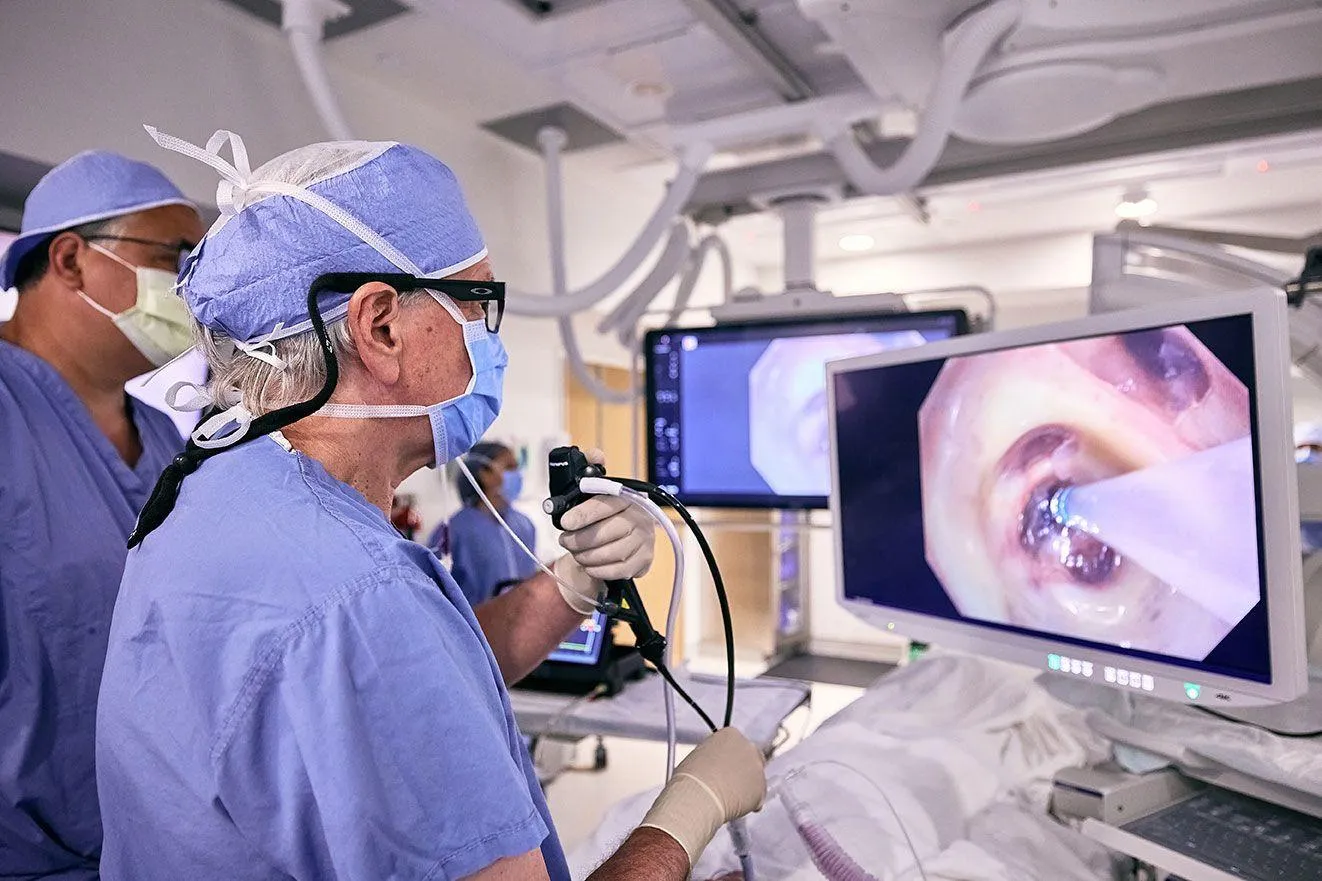
Fiberoptic bronchoscope specifications should be confirmed from the clinical workflow, device architecture and purchasing evidence, not from a single model name. Before sending an RFQ, buyers should define the intended department, patient group, use scenario, insertion route, outer diameter, working-channel need, insertion length, angulation, image and light platform, monitor compatibility, suction and accessory requirements, single-use or reusable workflow, documentation, training needs and market approval requirements. For a product such as UE Medical’s Classic Flexible Videoscope, the safest procurement approach is to translate the hospital’s use case into measurable specification fields, then ask the supplier to confirm model fit, limitations, accessories and required evidence.
Start by Clarifying What the Buyer Means by “Fiberoptic Bronchoscope”
The search term “fiberoptic bronchoscope” is still widely used by hospitals, distributors and clinicians, but it can refer to different generations of flexible airway visualization devices. Some buyers may mean a traditional fiberoptic scope viewed through an optical path. Others use the same phrase to describe a flexible videoscope with a distal camera, external monitor and digital image workflow.
This terminology issue should be resolved before technical comparison begins. If the buyer needs an optical fiberoptic bronchoscope, the RFQ should say so. If the project actually needs a flexible videoscope for airway visualization, the specification should shift toward video platform, monitor compatibility, image workflow, accessories and department use.
That distinction matters commercially. Two suppliers can both reply to “fiberoptic bronchoscope specifications” while quoting different device architectures. One may quote a flexible videoscope system, another a traditional scope, and a third a disposable bronchoscope. The prices, accessories, maintenance responsibilities and infection-control workflow will not be equivalent.
UE Medical places flexible visualization products within its Flexible Videoscope product family. For the buyer, the first task is to confirm whether that product architecture matches the intended clinical and procurement need.
Define the Intended Use Before Reviewing Dimensions
A bronchoscope or flexible videoscope is selected for a procedure pathway, not for a specification table alone. The same device may be considered for difficult airway assessment, guided intubation, airway inspection, ICU airway management, tube-position confirmation or selected pulmonary visualization tasks. Each use case changes the importance of size, channel, image platform, maneuverability and infection-control workflow.
The RFQ should identify the target department and the intended procedures. An anesthesia department may prioritize rapid airway access, compatibility with endotracheal tubes and airway devices, and availability during difficult airway events. ICU and PICU buyers may focus on bedside readiness, compatibility with ventilation equipment and infection-control workflow. Pulmonary or endoscopy teams may need channel and accessory capability for a different procedure mix.
Do not ask one model to solve every department’s problem unless the hospital has already reviewed the clinical pathway. A device that fits an adult airway-management workflow may not automatically fit pediatric use, small airway tubes or procedures requiring a larger working channel. The correct specification comes from the intended route, patient group and clinical task.
This article supports equipment evaluation and procurement planning. It is not a clinical training guide or a substitute for device instructions for use, qualified clinician judgment or local hospital protocols.
Outer Diameter Must Be Matched to the Route and Airway Device
Outer diameter is one of the most important specifications because it controls physical access. A flexible scope must pass through the intended route and any airway device used with it. In procurement terms, the critical question is not “what is the smallest diameter?” but “which diameter fits the clinical route while still supporting the required visualization and channel function?”
If the scope is used through an endotracheal tube, supraglottic airway, laryngeal mask, airway conduit or other device, the buyer should provide the relevant inner diameter and the intended combination. Nominal device sizes do not replace model-level compatibility checks. The supplier should confirm the relationship between scope outer diameter, airway-device inner diameter, ventilation considerations and accessory pathway where applicable.
A smaller diameter can improve access in constrained routes, but it may come with trade-offs. Working-channel size, suction capacity, image components and durability may differ by model. A larger diameter may support a larger channel or different optical configuration, but it may reduce compatibility with smaller tubes or narrower anatomy.
The RFQ should therefore treat outer diameter as part of a compatibility chain:
patient group → airway route/device → scope outer diameter → channel requirement → clinical task.
If any link in that chain is missing, the supplier may quote a technically valid device that is not suitable for the intended pathway.
Working Channel Size Should Be Connected to Suction and Accessories
The working channel is not simply a number in millimeters. It determines whether suction, sampling or compatible accessories can be used as intended. In airway-management applications, channel function may affect secretion handling and procedural workflow. In pulmonary applications, channel and accessory compatibility may become even more important.
Buyers should define what the channel must do:
- whether suction is required;
- whether any accessory will pass through the channel;
- what accessory size or compatibility requirement applies;
- whether the channel must support routine use or occasional backup use;
- whether the device is used mainly for visualization without accessory work;
- whether cleaning or reprocessing workflow changes because of channel design.
A larger channel is not automatically the correct choice. It may require a larger scope, which can reduce compatibility with smaller airway devices. A smaller scope can improve access but may limit suction or accessory function. The buyer must decide which limitation is acceptable for the target procedure.
The supplier’s response should identify the channel size, compatible accessories, suction-related assumptions and any limitation that affects the intended use. A general statement that a scope “has a working channel” is not enough for RFQ approval.
Insertion Length and Distal Tip Movement Affect Workflow
Insertion length, field navigation and distal tip movement should be reviewed together. A flexible videoscope needs enough working length to reach the intended location through the selected route, while the distal end must provide controlled movement for orientation and observation.
For procurement, insertion length is not only a physical dimension. It interacts with the route, patient group, monitor location, assistant workflow and whether the scope is used through another airway device. If the scope is too short for the route, the device cannot complete the intended task. If the length creates excessive slack or awkward handling, the workflow may become less efficient.
Angulation and distal-tip control should be verified from the product specification and demonstration or sample review. The buyer should check whether the control range and response are suitable for the intended route, and whether the users can operate the scope while maintaining image orientation and device control.
Where the purchase is for training, distributor evaluation or a multi-department platform, a representative trial can help confirm whether the length and handling characteristics fit the actual workflow.
Visualization Platform and Monitor Compatibility Should Be Confirmed Early
For a flexible videoscope, the imaging system is part of the purchased configuration. A scope that produces a good image on one platform is not automatically compatible with another monitor, cart, recorder or hospital information workflow.
Buyers should ask:
- which monitor or display platform the scope connects to;
- whether the monitor is included in the quotation;
- whether image capture, recording or teaching output is required;
- whether the hospital already owns a compatible UE Medical platform;
- whether connectors, cables, adapters or software versions are model-specific;
- whether the quotation covers the full working system or only the scope.
This is a major quotation risk. A supplier may quote only the handheld scope while another includes a monitor, cart or accessory set. The headline device price then fails to represent the real system cost or readiness.
In the RFQ, separate the device body, monitor/display platform, cables, adapters, accessories, storage and documentation. The buyer can then compare the same delivered system rather than comparing one complete setup against one incomplete component.
Single-Use and Reusable Workflows Require Different Evidence
Flexible airway visualization devices can enter either single-use or reusable workflows depending on the selected product. The difference is not only environmental or cost-related; it changes procurement, storage, availability, infection-control procedures, staff responsibility and total operational cost.
For a reusable flexible videoscope such as the target Classic Flexible Videoscope category, the buyer should request current reprocessing instructions, cleaning and high-level disinfection or sterilization requirements where applicable, compatible processing resources, turnaround expectations, storage conditions, traceability requirements and service or repair pathway.
For single-use devices, the evidence pattern is different. Buyers may focus on shelf life, sterile packaging, storage, disposal, availability, lot traceability and case-by-case consumable cost. Neither workflow is automatically better for every hospital. The correct decision depends on procedure volume, emergency availability, infection-prevention policy, staffing and budget model.
| Workflow Area | Reusable Flexible Videoscope Question | Single-Use Scope Question |
| Availability | Can the facility process and return the device to service on time? | Is stock available where the procedure occurs? |
| Infection control | Can reprocessing instructions be followed and documented? | Does packaging and disposal fit facility policy? |
| Cost model | How are purchase, reprocessing, repair and downtime considered? | How is cost per procedure and stock management considered? |
| Evidence | IFU, reprocessing workflow, service and traceability records | Sterile packaging, shelf life, lot records and disposal requirements |
The buyer should not reduce the decision to unit price. The purchasing team needs an operational workflow that the facility can actually execute.
Documentation Should Be Tied to the Destination Market and Use Case
Medical device procurement requires documentation that matches the product, market and intended use. Buyers should not accept a generic certificate list as proof that the quoted device fits their regulatory or hospital approval process.
Useful evidence may include a product datasheet, instructions for use, device classification or registration evidence for the target market, declaration or certificate required by the distributor, reprocessing instructions for reusable devices, packaging or shelf-life information where applicable, and training or user-support materials. The exact package depends on the buyer’s country and institutional requirements.
The document review should verify:
- the document names the quoted product or compatible model family;
- the intended use matches the buyer’s planned application;
- key specifications match the RFQ;
- the market authorization or registration evidence is relevant to the destination market;
- accessory and monitor compatibility are included where needed;
- reprocessing or single-use instructions are current and practical for the facility.
A certificate that applies to a company, another model or a different product generation may not support the current purchase. Ask the supplier to connect every document to the exact configuration being quoted.
What Should Buyers Verify in the Classic Flexible Videoscope Page?
UE Medical’s Classic Flexible Videoscope page is the target product detail page for this RFQ topic. It should be used as the product reference for the flexible videoscope family, while the hospital or distributor still defines the exact specification fields needed for the project.
The product page alone should not be treated as a complete procurement specification. The buyer still needs to confirm intended use, patient group, route, size, channel, length, angulation, display platform, accessory set, single-use or reusable workflow, documentation, training and market requirements.
For multi-department projects, the product-page review should be converted into a configuration matrix. Each department can then confirm whether the same model, display platform and accessory package are suitable, or whether different scopes and workflows are required.
RFQ Specification Table for Fiberoptic Bronchoscope Procurement
| Specification Area | Buyer Input | Supplier Confirmation |
| Terminology | Traditional fiberoptic scope or flexible videoscope | Quoted device architecture and display platform |
| Clinical pathway | Department, intended procedures and patient group | Model fit and any use limitation |
| Physical access | Route, airway device, tube size or access constraints | Outer diameter and compatibility evidence |
| Channel function | Suction or accessory needs | Working channel size and compatible accessories |
| Visualization system | Monitor, recording, teaching or platform needs | Included monitor/cable/accessory scope |
| Workflow | Single-use or reusable process and availability needs | IFU, reprocessing or packaging evidence |
| Documentation | Destination-market and hospital approval requirements | Model-specific documents and deviations |
The table is not a substitute for clinical review. It gives the procurement team a clean way to ask for comparable quotations and to identify gaps before a device is trialed or approved.
When Should the Buyer Reconsider the Selected Scope?
The selection should be reconsidered when the use case changes from airway guidance to pulmonary diagnosis, from adult use to pediatric use, from a reusable workflow to single-use emergency availability, or from simple visualization to accessory-based intervention. Each change can alter outer diameter, channel, length, platform and documentation needs.
The conclusion also changes when local regulation, hospital infection-prevention policy or clinician preference requires a specific device type. Procurement should support that requirement rather than forcing a catalogue match that is easier to quote.
If the buyer cannot define the route, patient group, accessory use or workflow, the RFQ is not ready for final price comparison. It should first become a technical clarification request.
Prepare the Final RFQ Around Model Fit and Evidence
A complete RFQ for a flexible videoscope or fiberoptic bronchoscope purchase should include:
- terminology: fiberoptic bronchoscope or flexible videoscope;
- target departments and intended procedures;
- patient group and route of use;
- required outer diameter or airway-device compatibility;
- working-channel and suction/accessory requirements;
- insertion length and angulation requirements if controlled;
- monitor, cart, recording or teaching-platform needs;
- single-use or reusable workflow;
- reprocessing, storage or disposal requirements;
- market authorization and documentation requirements;
- training, sample or demonstration requirements;
- quantity by department or configuration;
- accessories, spares and packaging scope;
- destination market and supplier deviation list.
Ask the supplier to return the response as Confirmed Configuration / Compatible Accessories / Documentation Scope / Workflow Requirement / Deviation / Buyer Input Required. Once those inputs are clear, buyers can send the project through UE Medical’s contact and inquiry page with a specification that supports technical review rather than a vague request for “fiberoptic bronchoscope specifications.”
-
 Bronchoscopy Simulation: What Should Training Systems Measure?September 23, 2026
-
How Much Does a Video Laryngoscope Cost? Key Price Factors for Hospital BuyersSeptember 28, 2026
-
How AI Can Support Structured Bronchoscopy Training for CliniciansSeptember 23, 2026
-
How to Compare Single-Use Bronchoscope Configurations for Hospital ProcurementSeptember 18, 2026


 Room 3301, Sunon Central Business Building,
No. 200 Citizen Street, Shangcheng District, Hangzhou, Zhejiang, 310020, China
 +86 755 8977-4077