




How to Compare Single-Use Bronchoscope Configurations for Hospital Procurement
 September 18, 2026
 290


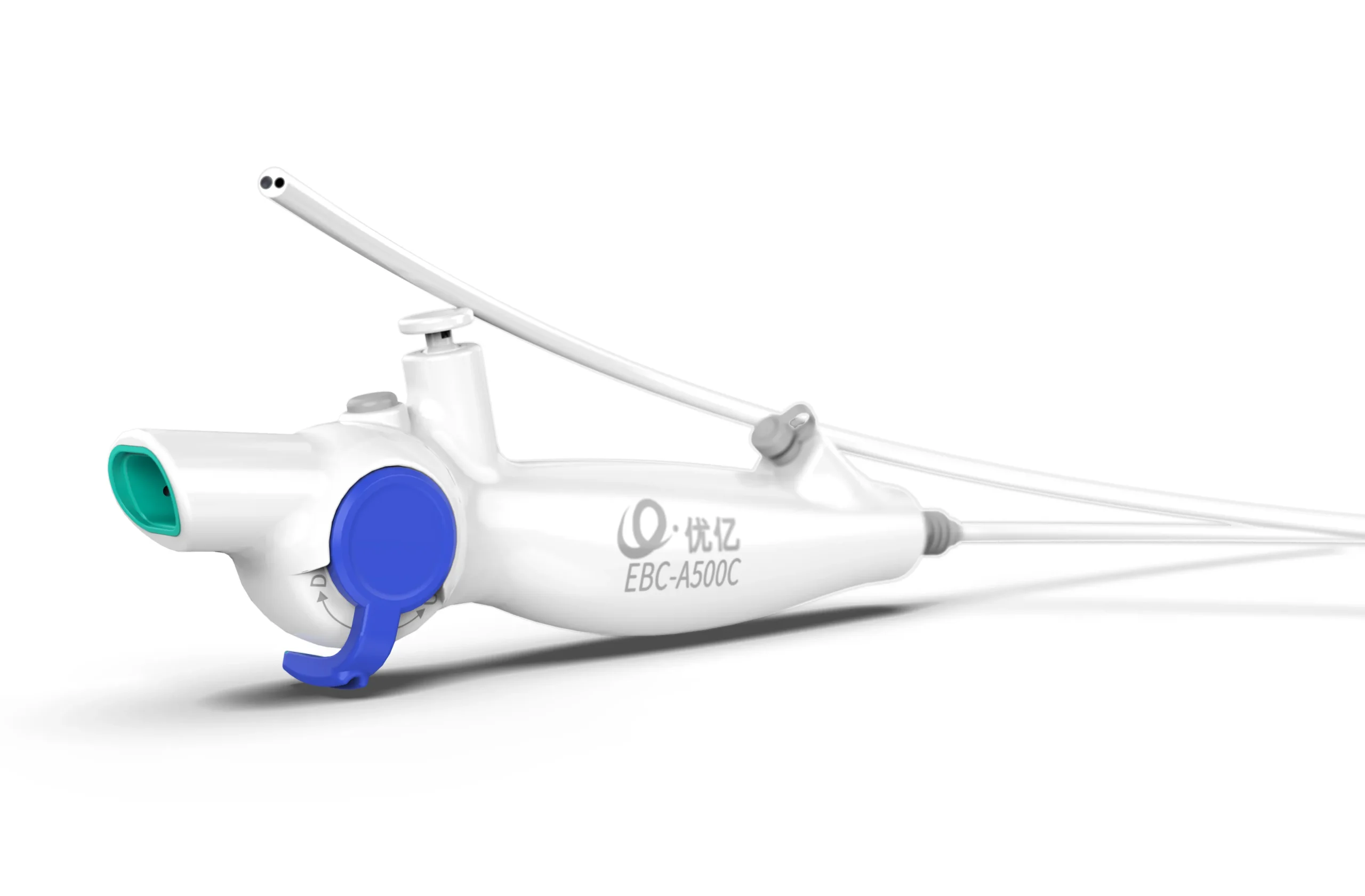
Single-use bronchoscopes should be compared as complete clinical and supply configurations rather than by unit price or image-quality claims alone. Buyers should first define the intended department and application, required diameter range, display workflow, sterile supply model, expected usage volume and documentation requirements.
The next step is to ask each supplier to identify the exact model and configuration that meets those conditions.
UE Medical’s Single-use Bronchoscope provides several verifiable comparison points, including high-definition imaging, compatibility with portable displays and image processors, sterile single-use packaging, a lightweight design and more than three diameter options.
These characteristics should not be evaluated independently. The purchasing decision should connect application conditions, scope configuration, visualization platform, sterile supply and replenishment requirements into one procurement specification.
Translate the Search Term Into a Real Procurement Requirement
Commercial searches for bronchoscopes often begin with a product name, competitor reference or brand-led query.
That is useful for product discovery, but it is not enough for an RFQ.
A buyer searching for a specific single-use bronchoscope may actually need to answer a broader question:
What configuration is required for the hospital’s intended application?
Before requesting quotations, the buyer should therefore replace the search term with a neutral purchasing specification.
That specification should define:
- intended department;
- intended use;
- required diameter options;
- required visualization setup;
- portability requirements;
- sterile packaging expectations;
- expected order and replenishment volume;
- target market;
- required documentation.
This allows products from different suppliers to be compared against the same purchasing requirement.
Buyers reviewing the wider product family can start from UE Medical’s Endoscope product range before narrowing the requirement to a specific bronchoscope configuration.
Factor 1: Define the Clinical Setting First
“Single-use bronchoscope” is a product category, not a complete project specification.
The same equipment category may be reviewed for different approved hospital environments, and those environments can create different operational requirements.
The buyer should document:
| Question | Procurement Purpose |
|---|---|
| Where will the device be used? | Defines the deployment environment |
| Who will use the system? | Clarifies training and workflow requirements |
| Which patient groups are expected? | Helps determine required diameter coverage |
| Is bedside mobility important? | Influences display and system configuration |
| How will scopes be stored? | Supports inventory planning |
| How quickly must stock be replenished? | Defines supply requirements |
Starting with the clinical setting prevents procurement teams from comparing two bronchoscopes that may not have been proposed for the same workflow.
Factor 2: Compare Diameter Coverage, Not Just the Product Name
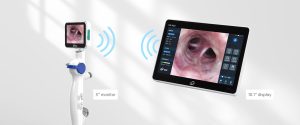
Diameter is one of the clearest examples of why a product family cannot be treated as a single specification.
UE Medical lists more than three different diameter options for its Single-use Bronchoscope.
The procurement question, however, should not stop at:
“How many diameters are available?”
The buyer should ask:
- Which diameter options are available for the offered product family?
- Which option is being quoted?
- Does the project require more than one diameter?
- Are all required variants supplied under the same display workflow?
- How should quantities be allocated between the required models?
A hospital project may therefore need a model mix rather than one bronchoscope configuration.
This is why “single-use bronchoscope — 100 pieces” is usually a weaker RFQ than a specification that defines the required model or diameter mix.
Factor 3: Evaluate the Visualization Workflow
Image performance is important, but a procurement team should not evaluate a bronchoscope as if it were an isolated camera.
The complete visualization workflow matters.
UE Medical’s product information describes:
- high-definition imaging;
- a precision imaging algorithm;
- portable display compatibility;
- image-processor compatibility;
- multiple display-terminal options.
These characteristics create several purchasing questions.
Where will the image be viewed?
A mobile bedside workflow may create different requirements from a fixed workstation environment.
What display equipment is already available?
The buyer should identify whether a new display is required or whether the proposed scope is intended to work with another compatible component within the supplier’s system.
What exactly is included in the quotation?
A supplier may quote the scope, the display system, or a broader configuration. The buyer should ask for the included and optional components to be listed separately.
This avoids comparing a scope-only quotation against a system quotation.
Factor 4: Understand What Single-Use Changes in the Workflow
The UE Medical product information identifies the Single-use Bronchoscope as disposable and supplied in sterile packaging.
From a procurement perspective, this reduces dependence on the reusable-scope reprocessing cycle.
That benefit should still be described carefully.
A single-use device does not mean that all infection-control responsibilities disappear.
Hospitals must still follow applicable requirements for:
- package integrity;
- storage;
- handling;
- approved use;
- aseptic workflow;
- disposal;
- local infection-control procedures.
The useful procurement comparison is therefore not:
Single-use = no infection-control process
but:
Single-use changes which parts of the infection-control and equipment-processing workflow the hospital must manage.
That distinction is important when purchasing teams compare single-use and reusable equipment models.
Factor 5: Portability Must Be Connected to the Deployment Plan
The Single-use Bronchoscope is described as lightweight and portable.
That can be relevant for departments where the equipment needs to move between locations or where a compact bedside setup is required.
But “portable” should not remain a general marketing claim.
Buyers should translate it into operational questions:
- Will the system remain in one room?
- Will it move between beds or departments?
- Where will the display be stored?
- How will unopened scopes be stored?
- How many devices must be immediately available?
- Is backup visualization equipment required?
This converts portability into a deployment specification.
For projects involving intensive-care workflows, buyers can also review UE Medical’s ICU & PICU Solutions to understand how an individual bronchoscope fits into the wider department-level product environment.
Factor 6: Supply Continuity Is Part of the Product Decision
With a single-use product, the purchasing relationship continues after the initial equipment decision.
The hospital or distributor must maintain a sufficient supply of sterile devices for expected use.
This creates a different purchasing question from that of a reusable scope.
Instead of asking only:
“What is the price per bronchoscope?”
the buyer should also define:
- estimated initial order;
- expected ongoing demand;
- preferred order frequency;
- required model or diameter mix;
- stockholding responsibility;
- delivery destination;
- required packaging information;
- replenishment expectations.
This is especially important for distributors managing local inventory or hospitals standardizing a single-use system across multiple departments.
The practical risk is not only choosing the wrong device specification.
It is also specifying the right device without defining how the required stock will be maintained.
Factor 7: Documentation Should Be Part of the Comparison
A medical-device quotation is incomplete if the buyer cannot verify what product and configuration are actually being offered.
Before commercial comparison, procurement teams should identify which documents are required for their target market and purchasing process.
Depending on the project, the RFQ may ask the supplier to confirm availability of:
- product specifications;
- exact model list;
- configuration list;
- instructions for use;
- sterile-packaging information;
- applicable market documentation;
- supporting accessory information;
- training information;
- service and supply support information.
The requirement should be market-specific.
A buyer should not assume that a document, registration or configuration applicable in one market automatically satisfies another market’s purchasing requirement.
The supplier should therefore confirm the documentation relevant to the buyer’s target destination.
A Better Way to Compare Single-Use Bronchoscope Quotations
A simple comparison table can prevent several common procurement mismatches.
| Comparison Area | Supplier A | Supplier B | Buyer Requirement |
|---|---|---|---|
| Intended application | Confirm | Confirm | Defined by buyer |
| Diameter/model | Confirm | Confirm | Required configuration |
| Imaging | Confirm | Confirm | Required visualization |
| Display setup | Confirm | Confirm | Portable / processor / other required setup |
| Sterile supply | Confirm | Confirm | Single-use sterile configuration |
| Included components | List | List | Like-for-like comparison |
| Initial quantity | Quote | Quote | Defined by buyer |
| Replenishment | Confirm | Confirm | Project requirement |
| Documentation | List | List | Target-market requirement |
| Training/support | Confirm | Confirm | Project requirement |
This table changes the commercial discussion.
Instead of asking suppliers:
“Please quote your best single-use bronchoscope.”
the buyer can ask:
“Please confirm the exact model, diameter, display configuration, sterile supply, included components, documentation and replenishment arrangement against the attached requirement.”
That produces quotations that are easier to evaluate.
Do Not Compare Unit Price Before Comparing Scope
Single-use bronchoscope prices can differ because the underlying quotation may not represent the same supply scope.
One quotation may refer only to the disposable scope.
Another may include a display component.
Another may be based on a different diameter or volume.
Another may include additional support or documentation.
For this reason, procurement teams should normalize the offered configuration before drawing conclusions from price.
A useful sequence is:
Application requirement
→ Model/diameter
→ Display configuration
→ Included components
→ Sterile supply
→ Documentation
→ Quantity and replenishment
→ Commercial comparison
Price becomes meaningful after the preceding fields have been aligned.
What UE Medical’s Product Evidence Supports
For the current Single-use Bronchoscope product, the available product information supports the following comparison points:
| Purchasing Question | UE Medical Product Evidence |
|---|---|
| Is single-use supply available? | Disposable design |
| How is the product supplied? | Sterile packaging |
| Are different size configurations available? | More than three diameter options |
| Does the system support visualization? | High-definition imaging |
| Are different display workflows supported? | Portable display, image processor and multiple display terminals |
| Is mobility considered? | Lightweight, portable design |
These are useful evidence points because they can be connected directly to procurement questions.
They should not be extended into unsupported claims.
For example, sterile single-use packaging can be discussed as a way to reduce dependence on reusable-device reprocessing and reduce cross-infection risk, but it should not be described as eliminating infection risk.
Likewise, more diameter options increase configuration choice, but the correct model still depends on the intended application.
Single-Use Bronchoscope RFQ Checklist
A useful request for quotation can be organized into five sections.
1. Project
- hospital, distributor or project type;
- target market;
- intended department;
- expected application;
- delivery destination.
2. Product Configuration
- required diameter or model;
- required model mix;
- required quantity;
- display requirement;
- supporting equipment requirement.
3. Supply
- initial order quantity;
- expected ongoing volume;
- replenishment requirement;
- packaging requirement.
4. Documentation
- specification sheet;
- model list;
- instructions for use;
- sterile-packaging information;
- applicable target-market documents;
- training information.
5. Commercial Scope
- included items;
- optional items;
- supporting equipment;
- supply schedule;
- service/support scope.
This format makes it easier for suppliers to return comparable answers.
Conclusion
Choosing a single-use bronchoscope should begin with the hospital’s intended workflow rather than a product name or competitor-led search term.
The buyer should define the clinical setting, required diameter range, display workflow, sterile supply model, quantity, ongoing replenishment and documentation before comparing commercial offers.
UE Medical’s Single-use Bronchoscope provides a product basis for this evaluation through its high-definition imaging, multiple display options, sterile disposable configuration, lightweight design and more than three diameter options.
The final procurement decision should still be based on whether the offered configuration matches the buyer’s defined project.
For project-specific configuration confirmation, buyers can contact UE Medical with the required application, diameter or model requirements, display setup, quantity, target market and documentation needs.
FAQ
What should buyers compare when sourcing a single-use bronchoscope?
Buyers should compare the intended application, diameter/model configuration, visualization setup, sterile supply, included components, documentation, required quantity and replenishment arrangement before comparing price.
Does UE Medical offer different single-use bronchoscope diameters?
The current product information states that more than three diameter options are available. Buyers should confirm the specific model and diameter required for their project.
Does a single-use bronchoscope eliminate reprocessing requirements?
A single-use design reduces dependence on reprocessing the bronchoscope itself. Hospitals must still follow applicable storage, handling, aseptic-use, disposal and infection-control procedures.
Why should buyers define the display configuration in an RFQ?
A bronchoscope can be part of a broader visualization system. Defining the required display setup helps prevent a scope-only quotation from being compared with a quotation that includes additional display or processing components.
Should buyers compare single-use bronchoscopes by price first?
No. The configuration and scope of supply should be aligned first. Differences in model, diameter, display setup, included components, quantity and supporting scope can make two unit prices non-equivalent.
-
 Bronchoscopy Simulation: What Should Training Systems Measure?September 23, 2026
-
How Much Does a Video Laryngoscope Cost? Key Price Factors for Hospital BuyersSeptember 28, 2026
-
How AI Can Support Structured Bronchoscopy Training for CliniciansSeptember 23, 2026
-
Which Fiberoptic Bronchoscope Specifications Should Buyers Confirm Before an RFQ?September 10, 2026


 Room 3301, Sunon Central Business Building,
No. 200 Citizen Street, Shangcheng District, Hangzhou, Zhejiang, 310020, China
 +86 755 8977-4077