




How Much Does a McGrath Video Laryngoscope Cost in 2026?
 August 7, 2026
 544


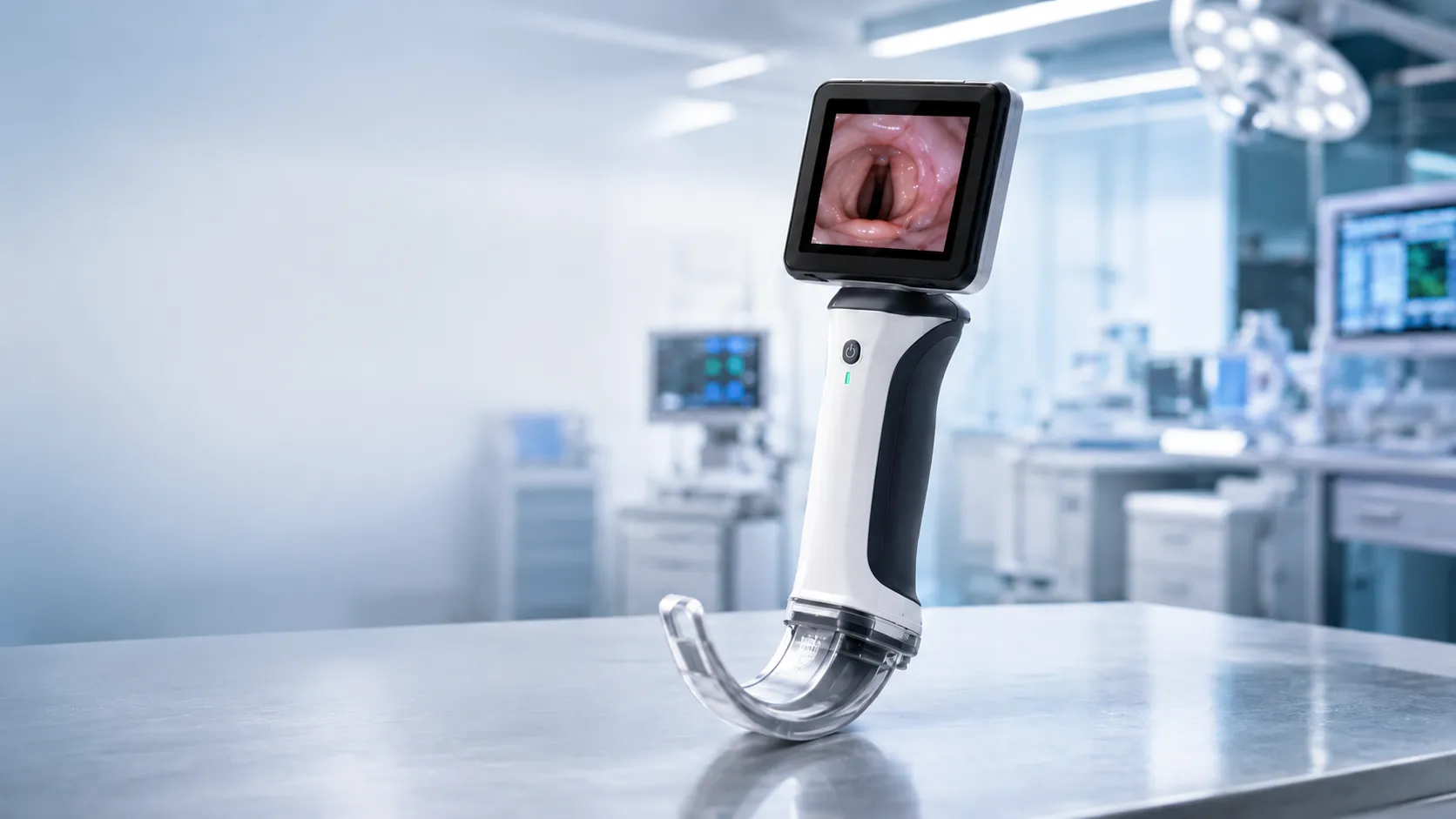
Direct Answer: As of August 2026, public listings for a new McGRATH MAC video laryngoscope commonly fall around US$2,500–$3,800 for the device or handle, although some distributor and list-price offers are substantially higher. Common disposable MAC blades are often listed around US$13–$20 each, while batteries add recurring cost. Hospital contract pricing, the newer McGRATH MAC+, taxes, accessories, and service can change the final purchase price materially.
For hospitals, anesthesia departments, emergency departments, EMS programs, medical-device distributors, and procurement teams, the more useful question is not only “How much does a McGrath video laryngoscope cost?” but what does one intubation-ready system cost over its planned service life? The purchase can include the video laryngoscope itself, disposable blades, batteries or charging equipment, carrying cases, cleaning or decontamination processes, training, spare units, warranty/service, and department-level accessories. UE Medical develops airway-management and visualization devices for hospital and distributor markets; buyers comparing alternatives can review its Video Laryngoscope product category while using the cost framework below to keep every supplier quote on the same basis.
What Is the Current Public Price Range for a McGrath Video Laryngoscope?
There is no single universal McGRATH price. Publicly visible 2026 listings vary by country, distributor, device generation, package contents, inventory status, and whether the offer is a new authorized-channel product, secondary-market unit, or used device.
| Pricing Reference | Observed Public Price | What the Price Appears to Cover | How a Buyer Should Use It |
| New McGRATH MAC public distributor listings | About US$2,495–$2,510 | New McGRATH MAC device/handle offers on U.S. medical-equipment channels | Useful as a lower-end public benchmark, not as a guaranteed hospital contract price |
| New unopened secondary-market listing | About US$3,000 | New McGRATH MAC unit with stated battery/tube/manual package | Shows that package contents and sales channel can shift the apparent device price |
| Other new-device public distributor pricing | About US$3,800 | New McGRATH MAC device offered through another medical-training/equipment distributor | Demonstrates why procurement should request identical package definitions from all bidders |
| Higher list/MSRP-style offers | Roughly US$6,700–$7,600 | Higher public retail or list-price presentations for the legacy MAC | Do not treat the highest list price as the normal transaction price without a formal quotation |
| European public listing | About €1,989 before VAT and shipping | McGRATH MAC item 301-000-000 in a European medical-products channel | Shows how region, VAT, freight, and local distribution make direct currency comparisons unreliable |
Buyer takeaway: for budget screening, a reasonable 2026 working assumption for a new legacy McGRATH MAC is roughly US$2,500–$3,800 per device before the full hospital supply scope is normalized. That is a market-observation range, not an official manufacturer price. Formal hospital, distributor, or group-purchasing quotations may be lower or higher.
Does the New McGRATH MAC+ Cost the Same as the McGRATH MAC?
Buyers should separate the legacy McGRATH MAC from the newer McGRATH MAC+. Medtronic launched the McGRATH MAC+ in June 2026. The new model adds a larger higher-resolution screen plus streaming, recording, file storage, touchscreen functions, and wireless connectivity. Medtronic’s current product page directs buyers to contact a representative rather than publishing one universal price.
That means a search result showing a McGRATH MAC price should not automatically be used as the budget for a McGRATH MAC+ project. Before comparing offers, confirm:
- Exact model: McGRATH MAC or McGRATH MAC+
- Ordering code for the quoted handle/device
- Battery type and whether batteries or charging hardware are included
- Whether a relay or connected screen is required for the intended workflow
- Blade sizes and quantities included in the first order
- Carry case and other accessories
- Warranty and service scope
- Any hospital IT, training, or data-management requirements
A frequent procurement error is comparing a legacy MAC public street price with a fully configured MAC+ quotation. Those are different purchasing scopes.
How Much Do McGrath Disposable Blades Add to the Cost?
The ongoing consumable cost can become more important than the initial handle price in a high-volume department. Medtronic lists sterile single-use blade options for the McGRATH MAC platform, including Macintosh-style sizes 1–4 and the hyperangulated X3.
Public U.S. listings reviewed in August 2026 show common MAC blade sizes at approximately US$13–$20 per blade on some channels. Hyperangulated X3 blades can be higher, with public offers around the mid-US$40 range per blade in some listings. Contract, case-pack, region, and distributor pricing can differ.
| Annual Intubation Volume | Illustrative Blade Budget at US$13 Each | Illustrative Blade Budget at US$20 Each | What This Shows |
| 250 procedures | 3250 | 5000 | One year’s blades can already exceed the acquisition price of one handle. |
| 500 procedures | 6500 | 10000 | Consumable pricing becomes a major tender variable. |
| 1,000 procedures | 13000 | 20000 | High-volume departments should negotiate blade economics together with device price. |
| 2,500 procedures | 32500 | 50000 | Fleet-wide TCO can be driven more by per-use supplies than by the capital device. |
These figures are simple volume illustrations using observed public blade-price points; they are not UE Medical or McGRATH quotations. A hospital should replace them with its own expected annual case volume and contracted blade price.
How Much Do McGrath Batteries and Power Options Affect TCO?
The legacy McGRATH MAC uses a proprietary 3.6V battery system, and Medtronic states approximately 250 minutes of operating time for the disposable battery pack. Public battery listings reviewed in 2026 range from roughly US$55 to US$110 depending on channel and package.
The MAC platform also has rechargeable battery options, while the new MAC+ is designed around a removable rechargeable battery system. Battery economics therefore depend on the exact model, procedure volume, standby policy, battery rotation, charger requirement, and the hospital’s readiness standard.
For procurement, ask each supplier to state:
- Battery type supplied with each device
- Number of batteries included per handle
- Expected operating time under the manufacturer’s stated conditions
- Charging equipment included or optional
- Replacement battery price
- Expected battery service life or replacement basis
- How the department should maintain ready-to-use spare power
- Battery disposal or recycling responsibility where applicable
A low handle price can be offset by a more expensive long-term power strategy, especially when a fleet is deployed across OR, ICU, ER, and EMS locations.
Why Are Used McGrath Prices So Much Lower?
Used McGRATH MAC listings in 2026 range from several hundred dollars to more than US$2,000. Those offers are not directly comparable with a new, hospital-ready system. Some listings exclude the battery, carry only a short reseller warranty, or provide limited information about prior use and decontamination history.
For a medical device used in airway management, procurement teams should treat secondary-market price as a separate risk category. Verify:
- Serial number and device identity
- Authorized sales channel or source documentation
- Service and maintenance history
- Battery status
- Cleaning/decontamination status and instructions
- Software or firmware status where relevant
- Availability of manufacturer support
- Warranty and return terms
- Compatibility with current blades and accessories
Medtronic has previously published a safety notice involving stolen defective McGRATH MAC devices and advised healthcare professionals to purchase through trusted and reliable sources. For this reason, a very low used-device price should never be treated as equivalent to an authorized new-device quotation.
What Is the Real Hospital Cost of a McGrath Video Laryngoscope?
The most useful procurement metric is a three- or five-year total cost of ownership rather than purchase price alone.
Hospital TCO = device acquisition + blades + batteries/charging + accessories + cleaning/decontamination + training + service/warranty + spare capacity + downtime cost + tax/import/logistics.
| TCO Component | Buyer Input | Why It Changes the Decision |
| Capital devices | Number of handles required by OR, ICU, ER, EMS, carts, or backup policy | One hospital may need one unit; another may need a distributed fleet. |
| Blades/consumables | Annual intubation volume by patient group and blade type | High procedure volume can make consumables the largest cost line. |
| Power | Disposable versus rechargeable batteries, chargers, spare batteries | Readiness policy affects both annual cost and device availability. |
| Cleaning | Handle cleaning/decontamination workflow and staff time | Reusable hardware creates a workflow cost even when no disposable blade is counted. |
| Training | Initial education, onboarding, competency checks, simulation, refresher training | A platform used across departments can require significant rollout work. |
| Service | Warranty, repair turnaround, loaner policy, local support, spare unit strategy | A low device price is less attractive if downtime leaves an airway cart without equipment. |
| Accessories/data | Cases, relays, screens, recording, connectivity, IT requirements | The newer connected platform can have a different system boundary from a legacy handle. |
How Should Hospitals Compare McGrath With Other Video Laryngoscopes?

A procurement team should avoid a simple “McGRATH price versus competitor price” table unless every row uses the same clinical and commercial assumptions. Normalize device architecture, patient/blade coverage, consumables, cleaning, battery system, display/data functions, warranty, service, and annual case volume.
UE Medical’s current airway-management portfolio includes multiple video-laryngoscope architectures. For example, its Classic Reusable Video Laryngoscope is a reusable platform, while the UED-C Video Laryngoscope is designed around disposable blades. These should not be presented as identical substitutes for McGRATH; instead, hospitals should compare the configuration that fits their own intubation workflow, infection-control policy, patient range, data requirements, and service model.
Current UE Medical product information describes the reusable VL platform with five sizes plus photo/video recording, while UED-C uses disposable blades across multiple handle/blade configurations and includes high-definition visualization plus touchscreen/Wi-Fi/data-management functions. The actual quoted configuration, local registration status, included accessories, and clinical-use instructions should be confirmed for the destination market.

Which Cost Model Fits OR, ICU, ER, and EMS Buyers?
Department type changes what “good value” means. UE Medical’s website is organized around multiple clinical solutions, including OR, ICU/PICU, and ER/EMS. Hospitals evaluating video laryngoscopy should therefore budget by use case rather than forcing every department into one cost assumption.
| Use Environment | Main Cost Question | Procurement Priority |
| Operating Room | How many rooms and airway carts require immediate access? | Fleet size, blade mix, cleaning turnaround, training consistency |
| ICU/PICU | How often is the device used, and what pediatric/adult coverage is required? | Availability, blade coverage, difficult-airway readiness, storage |
| Emergency Department | Can the device remain immediately ready despite unpredictable case volume? | Battery readiness, speed of setup, consumable stock, backup device |
| EMS | What is the cost of carrying, protecting, powering, and replacing field equipment? | Portability, battery strategy, environmental handling, inventory control |
| Teaching Hospital | Does the platform need image/video capture, second-screen viewing, or case review? | Training functions, data workflow, privacy/IT review, faculty supervision |
For operating-room planning, buyers can also review UE Medical’s OR airway-management solution to map the video laryngoscope into a broader airway workflow rather than evaluating the handle in isolation.
What Does a Representative Hospital Procurement Scenario Look Like?
Scenario: A hospital is replacing direct laryngoscopes with video laryngoscopy across the emergency department and selected operating rooms. This is a representative procurement scenario, not a claimed UE Medical customer case.
Business Background: The procurement team finds public McGRATH MAC prices around US$2,500–$3,800 and initially budgets only the number of handles required.
Problem: When the tender is drafted, annual disposable blade volume, batteries, spare devices, cleaning workflow, pediatric blade coverage, training, warranty, and service response are not included. A newer MAC+ offer also enters the tender, but it contains connected features not included in the original budget.
Cause: The hospital is comparing device prices rather than intubation-ready system costs. Legacy MAC, MAC+, and alternative video-laryngoscope platforms are being compared with different package boundaries.
Solution: The hospital creates one five-year TCO worksheet. Every supplier must state device quantity, included blades/accessories, annual consumable price, power strategy, cleaning requirements, warranty, service, training, registration status, delivery, and acceptance-test scope. The clinical team separately scores visualization workflow and blade/patient coverage.
Buyer Decision Value: The hospital can choose a higher-priced device if it lowers consumable, downtime, training, or fleet costs—or choose a lower-priced platform when the clinical and service requirements are still met. The award is based on documented total cost and fit, not on one public web price.
What Should Buyers Include in a Video Laryngoscope RFQ?
| RFQ Section | Buyer Should Provide | Supplier Should Confirm |
| Clinical use | OR/ICU/ER/EMS use, routine versus difficult-airway needs, adult/pediatric scope | Intended-use fit and available blade/device configuration for the market |
| Device architecture | Reusable/disposable preference, display, capture, connectivity, training needs | Exact model, included functions, accessories, and limitations |
| Consumables | Expected annual intubation volume by blade size/type | Blade unit/case pricing, MOQ, shelf-life/storage information where applicable |
| Power | Readiness policy, number of locations, charging/storage environment | Battery type, runtime basis, chargers, spare battery price, replacement model |
| Cleaning | Hospital infection-control workflow | Model-specific cleaning/decontamination instructions and reusable-part boundaries |
| Regulatory | Destination country and hospital requirements | Registration/certification status for the exact quoted product and destination |
| Service | Required warranty, repair turnaround, training, spare/loaner expectations | Warranty terms, technical support route, spare parts, training, service exclusions |
| Commercial | Device quantity, annual consumables, destination, delivery target, Incoterm | Capital price, consumable price, MOQ, lead time, packing, freight boundary, quotation validity |
Frequently Asked Questions
How much is a new McGrath video laryngoscope?
Public 2026 listings for a new legacy McGRATH MAC commonly appear around US$2,500–$3,800, although some retail/list offers are much higher. Hospital contract prices depend on distributor, country, quantity, package, service, and negotiation.
How much does a McGrath MAC+ cost?
Medtronic launched the McGRATH MAC+ in June 2026, but its current official product page directs buyers to contact a representative rather than publishing one universal price. A MAC+ quotation should not be estimated from legacy MAC street pricing alone.
How much are McGrath laryngoscope blades?
Common disposable MAC blade sizes are publicly listed around US$13–$20 each on some U.S. channels, while hyperangulated X3 blades can be higher. Contract and case-pack pricing may differ materially.
How much does a McGrath battery cost?
Public 2026 listings for legacy McGRATH MAC battery packs are roughly US$55–$110 on some channels. The actual fleet cost depends on disposable versus rechargeable power, chargers, procedure volume, and spare-battery policy.
Is a used McGrath laryngoscope a good way to reduce cost?
A used unit can have a much lower purchase price, but hospitals must verify device identity, source, service history, battery, decontamination, warranty, and manufacturer support. Secondary-market equipment should not be treated as equivalent to a new authorized-channel device.
What is the biggest hidden cost of a video laryngoscope?
In a high-volume department, disposable blades can exceed the initial handle price within the first year. Other hidden costs include batteries, cleaning, training, accessories, spare devices, repair downtime, software/data requirements, and logistics.
How should a hospital compare McGrath with UE Medical video laryngoscopes?
Use one RFQ and TCO model. Compare exact device architecture, patient/blade coverage, annual consumables, cleaning, power, visualization/data functions, registration, warranty, training, service, delivery, and acceptance requirements. Do not assume products are equivalent based only on the label “video laryngoscope.”
Request a Configuration and Five-Year Cost Review
Prepare the intended departments, device quantity, annual intubation volume, adult/pediatric blade mix, difficult-airway requirements, reusable/disposable preference, cleaning workflow, battery/readiness policy, image/data requirements, destination market, registration needs, training, warranty, delivery target, and expected annual consumable volume. Submit them through UE Medical’s contact and quotation page. The team can review available video-laryngoscope configurations, identify missing procurement inputs, and prepare a quotation that separates device cost, consumables, accessories, service, documentation, lead time, and exclusions for a more comparable TCO analysis.
Trademark and pricing note: McGRATH and McGRATH MAC are trademarks of their respective owner. UE Medical is not affiliated with McGRATH or Medtronic. Prices in this article are public market observations reviewed in August 2026 and are provided for procurement benchmarking only; they are not official quotations and may change by region, channel, package, tax, freight, and contract terms.
-
 Bronchoscopy Simulation: What Should Training Systems Measure?September 23, 2026
-
How Much Does a Video Laryngoscope Cost? Key Price Factors for Hospital BuyersSeptember 28, 2026
-
How AI Can Support Structured Bronchoscopy Training for CliniciansSeptember 23, 2026
-
How to Compare Single-Use Bronchoscope Configurations for Hospital ProcurementSeptember 18, 2026


 Room 3301, Sunon Central Business Building,
No. 200 Citizen Street, Shangcheng District, Hangzhou, Zhejiang, 310020, China
 +86 755 8977-4077