




What Is a Bronchoscope Used For? Clinical Applications in Pulmonology and Critical Care
 August 27, 2026
 756


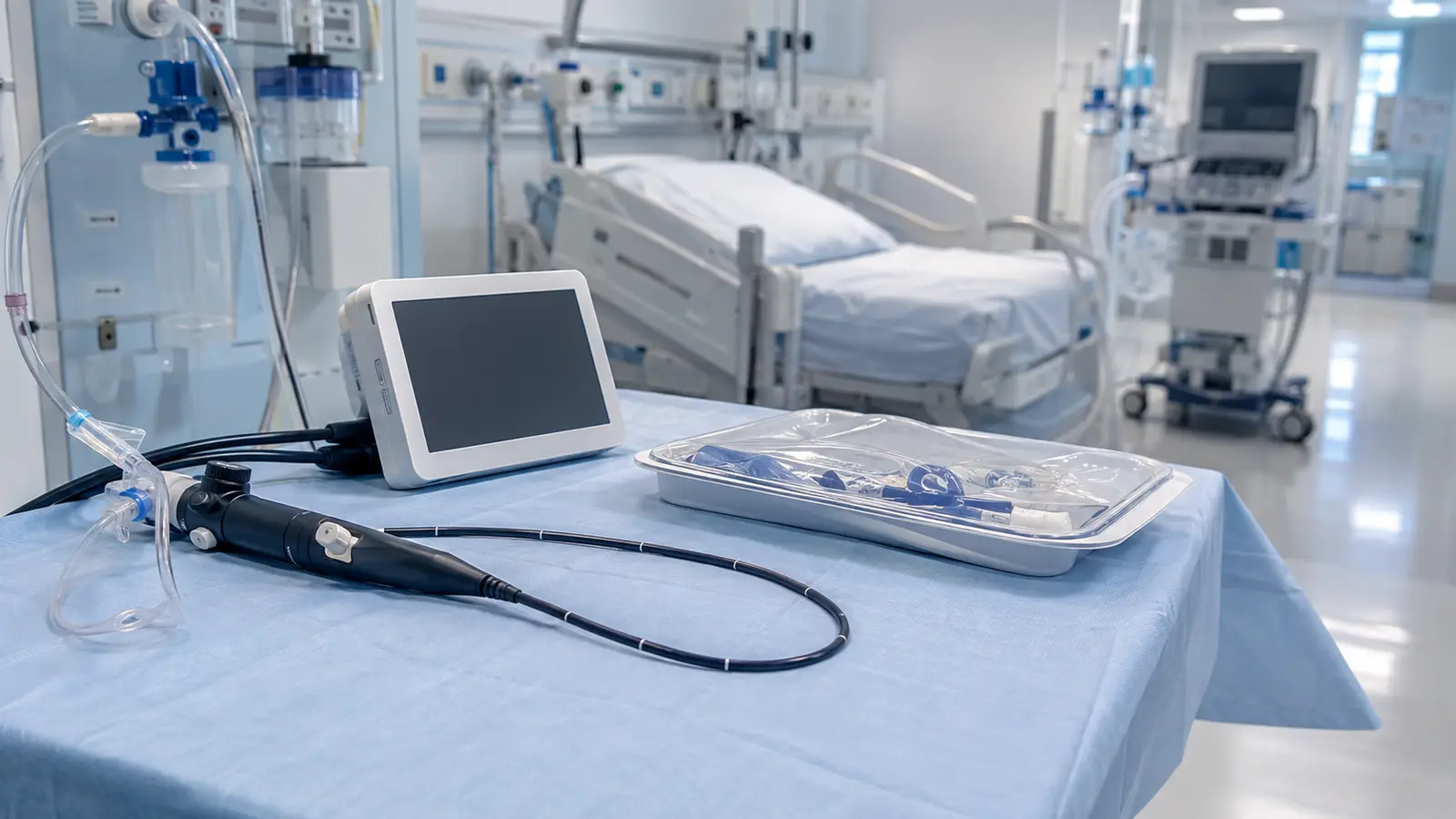
A bronchoscope is used to view the larynx, trachea and bronchial airways and, when its design and clinical indication permit, to support sampling, suction, secretion clearance, foreign-body management, selected interventions or airway guidance. It may be used in a bronchoscopy suite, operating room, intensive-care unit or other controlled setting by trained healthcare professionals. The intended task determines the required scope: a device chosen mainly for airway inspection may not provide the channel capacity, dimensions, accessories or system configuration needed for a therapeutic or critical-care workflow. “What is it used for?” is therefore both a clinical question and a device-selection question.
Direct airway visualization is the starting point
The most fundamental use of a bronchoscope is real-time visualization. It allows the clinical team to inspect the airway for findings that may include obstruction, abnormal tissue, inflammation, bleeding, secretions or structural changes. The device can also help clinicians determine where a finding is located and whether additional sampling or intervention is appropriate under the applicable protocol.
Visualization quality is not defined by resolution alone. Illumination, field of view, maneuverability, image stability and the ability to maintain a useful view when fluid or secretions are present all affect the clinical workflow. In procurement, the relevant question is not “Does it have a camera?” but “Can the offered scope, display and channel arrangement support the intended task in the planned care setting?”
A diagnostic inspection and a complex interventional procedure do not automatically require the same configuration. Scope dimensions may influence airway access, while the channel and compatible accessories determine which sampling or therapeutic tasks the system can support. The device’s instructions for use and local clinical governance remain the controlling boundaries.
Diagnostic bronchoscopy: inspection and specimen collection
Bronchoscopes are used to investigate respiratory symptoms or imaging findings when direct airway assessment is clinically indicated. During a procedure, the scope may support visual examination and the collection of fluid, cells or tissue through techniques and accessories appropriate to the device. Samples can then be sent for laboratory, microbiological, cytological or histopathological analysis as required by the care team.
These uses create several procurement dependencies. If sampling is expected, the working channel must accommodate the selected accessory and workflow. The accessory diameter must be compatible with the channel, but nominal fit is only the beginning. Passage through bends, channel friction, suction performance while an accessory is present and the ability to remove the specimen without disrupting the workflow may also matter. The scope, accessories and specimen-handling process should therefore be evaluated as one system.
Facilities planning pulmonary and bedside applications can review the available ICU and PICU endoscopy solutions as a product-navigation starting point. A category page helps identify the relevant equipment family; the final selection still needs to be matched to the procedure, patient population, monitor, accessories and local requirements.
Secretion management and airway clearance
In critical care, a bronchoscope may be used to inspect an artificial or natural airway and support clinically indicated suction or secretion management. This can be relevant when direct visualization is needed to locate material, assess airway patency or guide a clearance task. The purpose is not simply to provide suction. The value comes from combining a visual pathway with a controlled working channel.
Channel diameter and secretion characteristics are closely related. A larger channel may support stronger flow or easier clearance, but scope outer diameter and the access route still constrain the choice. When the bronchoscope passes through an endotracheal tube, it occupies part of the available lumen. The bronchoscope-to-tube relationship can affect airflow and ventilation during the procedure, especially in smaller airways. This is a clinical planning issue, not a catalogue comparison that can be resolved by selecting the largest channel.
A procurement specification should identify the expected airway interface, patient group and suction task, then ask the supplier to confirm the compatible scope size and system connections. The facility’s clinical team must make the final procedural decision. Product data can establish dimensional and functional compatibility; it cannot replace patient-specific assessment.
Foreign-body and obstruction management
Bronchoscopy can support the evaluation and removal of selected airway foreign bodies or obstructing material. The exact approach depends on the object, location, patient, airway risk and available specialist resources. Flexible and rigid bronchoscopes may have different roles, and additional retrieval instruments, anesthesia arrangements or operating-room support may be required.
This is an area where a broad statement such as “suitable for foreign-body removal” can be misleading. A scope may permit visualization but lack the channel or accessory compatibility required for a particular retrieval method. Even when an accessory fits, the object may not be appropriate for that technique. Procurement teams should separate three questions: whether the device is indicated for the intended use, whether the required instrument can pass and operate through the channel, and whether the facility has the trained team and supporting equipment for the planned procedure.
Airway guidance in anesthesia and critical care
Flexible bronchoscopes can be used in selected airway-management workflows, including visual guidance during difficult or otherwise planned tracheal intubation and confirmation tasks performed by trained clinicians. In mechanically ventilated patients, they may also be used for airway inspection, selected sampling and clinically indicated clearance procedures. These applications place a premium on availability, maneuverability, rapid system setup and compatibility with the surrounding airway equipment.
The device requirement changes with the route. A scope intended to pass through an endotracheal tube must have appropriate dimensional clearance. A scope used with a separate airway device may require a different effective length, distal flexibility or connector arrangement. Emergency or bedside deployment adds practical questions: Is the display immediately available? Is the battery or power arrangement ready? Are suction connections and required accessories stored with the scope? Can staff identify the correct model without opening unnecessary sterile items?
A single-use bronchoscope can be considered where the facility’s application, infection-control policy and deployment model support that route. The purchase decision should still confirm the exact scope size, channel, display compatibility, sterile status, storage conditions, accessories and disposal process. “Single-use” defines the use model; it does not make every model interchangeable.
How the care setting changes the bronchoscope requirement
| Care setting or application | Typical bronchoscope role | Selection questions created by that use |
| Pulmonology or bronchoscopy suite | Airway inspection, sampling and planned diagnostic or therapeutic work | Image chain, channel and accessory compatibility, procedure range, documentation and processing workflow |
| ICU or PICU | Bedside visualization, selected sampling, secretion management and airway assessment | Patient-size options, endotracheal-tube clearance, rapid availability, suction setup and infection-control route |
| Operating room | Selected airway guidance, inspection and procedure support | Compatibility with airway devices, monitor placement, effective length, sterile or processed availability and backup planning |
| Emergency deployment | Time-sensitive airway visualization within an established clinical protocol | Readiness, portable display, power, stored accessories, model identification and staff training |
| Pediatric application | Airway visualization and selected diagnostic or therapeutic tasks in smaller patients | Outer diameter, channel trade-off, access-device clearance, age or size range and specialist clinical requirements |
| Training and simulation | Skill development and workflow rehearsal outside patient care | Training objectives, simulator compatibility, representative controls and separation from clinical-use inventory |
The same hospital may need more than one bronchoscope configuration. A slim model may improve access in a smaller pathway but offer a smaller working channel. A model selected for stronger suction or larger instruments may have a greater outer diameter. A single display platform may simplify deployment, yet only if every proposed scope is explicitly compatible with it. Building a product mix around care settings is usually more reliable than asking one model to cover every application.
Diagnostic and therapeutic uses create different evidence needs
For a mainly visual diagnostic application, buyers may focus on imaging, maneuverability, dimensions and basic sampling compatibility. Therapeutic work can add more demanding channel, suction and accessory requirements. Airway-management use introduces compatibility with tubes, masks or other access devices. Bedside deployment adds readiness, storage and display considerations.
Supplier evidence should follow those differences. Request a controlled technical specification for dimensions and channel data, a compatibility list for monitors and accessories, and current instructions for use that define intended use, warnings, processing or disposal. Where a product is reusable, reprocessing instructions and the facility’s ability to carry them out form part of the operational decision. Where it is single-use, sterile presentation, shelf and storage information, disposal arrangements and availability across the required size range need confirmation.
Regulatory documentation must be checked for the exact model and destination market. A registration or clearance for one bronchoscope does not automatically cover another model, accessory or display. The same applies to clinical claims: statements should be traced to the device’s intended use rather than borrowed from the general capabilities of bronchoscopy.
Common procurement mistakes behind the question “What is it used for?”
The first mistake is treating all clinical uses as equivalent. Visualization, sampling, secretion clearance and instrument-based intervention place different demands on the channel and system. A product that performs one role may not be configured for another.
The second is selecting by outer diameter alone. A slimmer device may improve access, but its working channel, image system and accessory options still have to support the planned task. At the other extreme, choosing the largest channel without considering the airway interface can create a poor match.
The third is overlooking the display and accessories. A scope that arrives without a compatible monitor, required cable, suction interface or procedure accessory may not be ready for use. Every quotation should state what is included, optional and excluded.
The fourth is assuming that single-use eliminates all workflow controls or that reusable automatically reduces cost. Single-use scopes still require correct storage, model selection, display readiness and waste handling. Reusable scopes require validated processing, traceability, inspection and turnaround resources. A fair comparison considers the entire clinical and operational pathway.
Frequently asked questions
Is a bronchoscope used only for diagnosis?
No. Bronchoscopes can support diagnostic inspection and sampling, but some configurations and clinical workflows also support suction, foreign-body management, selected interventions or airway guidance. The exact use depends on the device’s intended use, accessories, care setting and clinical judgment.
Can a bronchoscope be used for intubation?
A flexible bronchoscope may be used for visual guidance in selected intubation workflows by trained clinicians. Suitability depends on the patient, clinical plan, scope dimensions, airway device, display and local protocol. Product compatibility does not by itself determine whether the procedure is appropriate.
Can one bronchoscope be used for both adult and pediatric care?
Not automatically. Smaller patients and access devices can require a slimmer insertion tube, while a smaller scope may provide less channel capacity. Facilities should match model dimensions and functional requirements to the intended patient groups rather than relying on a broad adult/pediatric label.
Does a larger working channel always make a bronchoscope better?
No. A larger channel may support suction or accessory use, but outer diameter, airway clearance, maneuverability and the planned clinical task remain important. The useful specification is the channel-to-scope combination that fits the intended workflow.
Define the application before requesting a quotation
For a comparable proposal, the inquiry should state the target country and care setting; intended diagnostic, sampling, suction, airway-management or therapeutic tasks; adult or pediatric use; relevant airway or tube interface; preferred use model; required scope and channel range; monitor already installed or needed; accessories; quantity; documentation; and delivery requirement. If the hospital expects several applications, separate them instead of asking for one unspecified bronchoscope.
The supplier should return the exact model for each application, the offered scope and display configuration, controlled dimensions, channel and accessory compatibility, included and optional items, use or processing requirements, applicable documentation and a clear deviation list. Submit those details through the project specification inquiry so the proposed configuration can be reviewed against the actual clinical setting. Once the application is fixed, price and availability can be compared on a consistent scope rather than across products intended for different jobs.
-
 Bronchoscopy Simulation: What Should Training Systems Measure?September 23, 2026
-
How Much Does a Video Laryngoscope Cost? Key Price Factors for Hospital BuyersSeptember 28, 2026
-
How AI Can Support Structured Bronchoscopy Training for CliniciansSeptember 23, 2026
-
How to Compare Single-Use Bronchoscope Configurations for Hospital ProcurementSeptember 18, 2026


 Room 3301, Sunon Central Business Building,
No. 200 Citizen Street, Shangcheng District, Hangzhou, Zhejiang, 310020, China
 +86 755 8977-4077