




How to Specify a Video Laryngoscope With Reusable Blades for Hospital Procurement
 September 18, 2026
 304


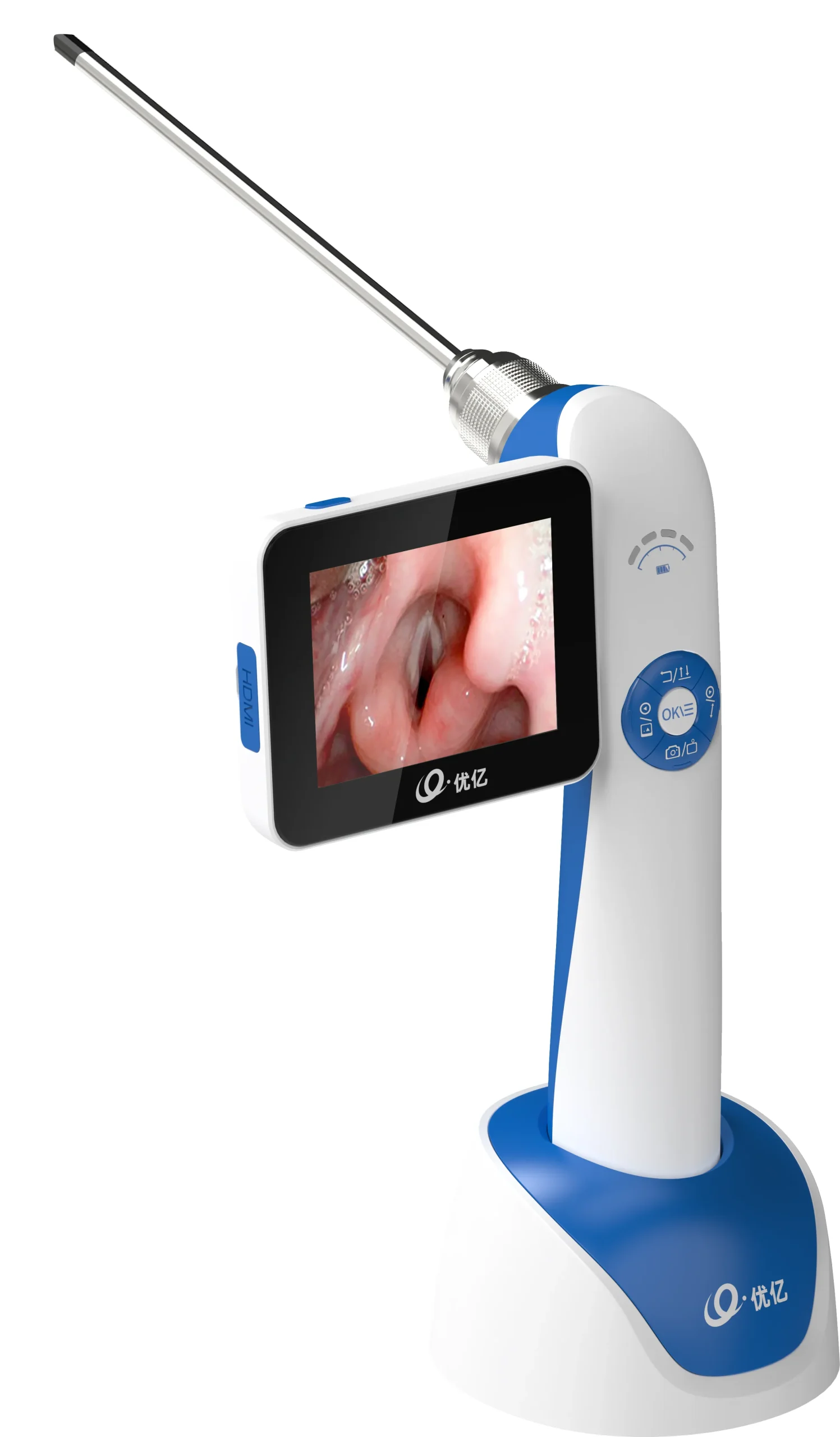
A video laryngoscope with reusable blades should be specified as part of a complete airway-management workflow rather than selected only by product name or blade type. Before requesting quotations, hospital and distributor buyers should define the intended clinical setting, required size coverage, reusable-component configuration, cleaning and high-level disinfection pathway, image and video documentation needs, and quantity.
These requirements should then be matched against a specific product configuration and supporting product evidence. For UE Medical’s Classic Reusable Video Laryngoscope, relevant product information includes a detachable handle design, support for immersion disinfection of the reusable handle, image and video documentation, five available size options, and an optimized viewing-angle design.
The goal of the RFQ is therefore not simply to ask whether a reusable video laryngoscope is available. It is to define a configuration that can be evaluated against the buyer’s actual workflow.
Start With the Clinical Setting, Not the Blade
The phrase “video laryngoscope with reusable blades” describes a general purchasing requirement, but it does not define a complete specification.
A hospital may be sourcing equipment for anesthesia, emergency airway management, intensive care, or a wider standardized airway-management platform. A distributor may be preparing a quotation for several hospital departments or a project in which different patient groups must be covered.
These purchasing situations should not automatically produce the same configuration.
Before comparing products, buyers should first answer:
- Where will the device be used?
- Which patient groups need to be covered?
- How many size options are required?
- Which components will be reused?
- What cleaning and disinfection process is available?
- Is image or video documentation required?
- How many systems are required?
- Which technical and market documents must accompany the quotation?
This converts a broad product keyword into measurable purchasing requirements.
For buyers reviewing a broader product range, UE Medical’s Video Laryngoscope category provides the relevant product family for comparison.
Key Specifications Buyers Should Define Before Comparing Quotations
A useful RFQ should separate the clinical requirement from the supplier’s proposed configuration.
| Procurement Variable | What the Buyer Should Define | Why It Matters |
|---|---|---|
| Clinical setting | Intended department or airway-management environment | Establishes the expected workflow |
| Patient coverage | Required patient groups | Determines the required size range |
| Size options | Sizes needed for the project | Prevents incomplete quotations |
| Reusable configuration | Components expected to be reused | Defines the reprocessing requirement |
| Cleaning pathway | Available cleaning and disinfection workflow | Determines operational compatibility |
| Documentation | Image/video documentation requirement | Affects case review, education and record workflow |
| Quantity | Required systems and project volume | Allows comparable quotations |
| Supporting evidence | Product specifications and required documents | Allows the buyer to verify the offered configuration |
The most important point is comparability.
If one supplier quotes a different size range, different reusable configuration or different supporting scope from another, comparing only the final price does not show whether the quotations are equivalent.
Why Size Coverage Should Be Defined Before the RFQ
A reusable video laryngoscope project should not use “standard size” as the only sizing requirement.
The procurement team should identify the patient range that the project is expected to support and then ask the supplier to identify which available sizes correspond to that requirement.
UE Medical’s Classic Reusable Video Laryngoscope is listed with five size options designed to cover a range of patient anatomies.
For the buyer, however, the useful question is not simply:
“How many sizes does the product have?”
The better questions are:
- Which sizes are included in the quotation?
- Which sizes are optional?
- How many of each size are required?
- Does the offered combination match the project’s expected patient coverage?
- Are replacement or additional reusable components available separately?
This distinction becomes especially important when multiple departments or facilities are being standardized under one purchasing project.
Reusable Configuration Must Be Matched to the Reprocessing Workflow
A reusable configuration creates a different operational pathway from a fully disposable product.
The procurement team therefore needs to evaluate the device together with the facility’s established cleaning and disinfection process.
According to the product information for the Classic Reusable Video Laryngoscope, the monitor and laryngoscope can be detached to support cleaning and high-level disinfection, while the reusable handle supports immersion disinfection.
This means the detachable design is not merely a mechanical feature. From a procurement perspective, it should be evaluated in relation to the hospital’s reprocessing pathway.
Buyers should confirm:
- Which parts are reusable.
- Which parts are detached before processing.
- Which approved cleaning and disinfection instructions apply.
- How the processed components are stored.
- Whether sufficient components are available for the expected workflow.
The supplier should provide model-specific instructions rather than relying on a general statement that a device is “reusable.”
The facility’s own infection-control requirements and approved operating procedures remain the governing requirements for actual use.
Reusable Does Not Automatically Mean a Lower-Cost Project
A reusable product should not be selected only because the component can be used again.
Likewise, a disposable product should not automatically be assumed to be more expensive simply because it is replaced after use.
The purchasing model is broader than the initial unit price.
For a reusable configuration, buyers may need to consider:
- reprocessing requirements;
- component turnaround;
- quantity of reusable components;
- backup availability;
- cleaning and disinfection workflow;
- storage;
- staff familiarity;
- long-term replacement needs.
This does not mean that a reusable configuration is more or less economical by default.
It means that the procurement team should compare configurations on the basis of the complete operating model rather than a single quotation line.
A supplier quotation becomes more useful when it identifies exactly what is included and what the hospital must already have in place.
Image and Video Documentation Should Be a Defined Requirement
Visualization equipment may also be part of a hospital’s documentation, training and case-review workflow.
The Classic Reusable Video Laryngoscope supports image and video capture for clinical documentation, case review, education and research.
For procurement teams, this should lead to another set of practical questions:
- Is image capture required?
- Is video recording required?
- Who needs access to the captured material?
- Is documentation part of the department’s normal workflow?
- Does the offered configuration include the functions required for that workflow?
Again, the purpose is not to turn a feature into a marketing statement.
The purpose is to connect the feature with a clearly defined purchasing requirement.
Product Evidence: How the Classic Reusable Video Laryngoscope Maps to the Requirement
The product page provides several pieces of evidence that buyers can map to their RFQ.
| Buyer Requirement | Product Evidence |
|---|---|
| Airway visualization | Optimized viewing-angle design |
| Reusable workflow | Detachable monitor and laryngoscope |
| Reprocessing | Reusable handle supports immersion disinfection |
| Documentation | Image and video capture |
| Patient coverage | Five size options |
| Design evidence | Patented viewing-angle and detachable-handle designs |
The product information identifies Chinese Invention Patent No. ZL201010290613.5 for the viewing-angle design and Chinese Patent No. ZL201510228744.3 for the detachable-handle design.
These references are more useful than unsupported claims such as “advanced design” because they allow the buyer to identify what the supplier is actually referring to.
The same principle should apply throughout the quotation: every material product claim should be tied to a specific model, configuration or document.
What Buyers Should Not Assume
Several assumptions can weaken a video-laryngoscope procurement specification.
“Reusable” does not define the full configuration
It does not tell the supplier which sizes, quantities, documentation functions or supporting items are required.
Five available sizes does not mean every quotation includes all five
The RFQ should state which size combination is required and ask the supplier to identify exactly what is included.
A detachable design does not replace hospital reprocessing procedures
Cleaning and disinfection must follow the relevant product instructions and facility protocol.
Image quality alone does not establish project fit
The device still has to match the intended workflow, patient coverage and configuration requirements.
The lowest quotation is not necessarily the same quotation
Before comparing price, buyers should check whether suppliers are quoting an equivalent scope of supply.
A Practical RFQ Checklist
Before requesting a quotation for a video laryngoscope with reusable blades, buyers can provide the following information:
Project information
- purchasing organization;
- target country or market;
- intended department;
- intended application;
- estimated quantity;
- delivery destination.
Configuration information
- required patient coverage;
- required size range;
- reusable-component requirement;
- number of systems;
- image/video documentation requirement;
- required supporting accessories.
Workflow information
- available cleaning and disinfection pathway;
- storage requirements;
- expected department deployment;
- backup requirement.
Documentation information
- required product specification;
- required model/configuration list;
- required market documentation;
- user documentation;
- training or service requirements.
Providing these details makes it easier for the supplier to return a quotation that can be compared on a like-for-like basis.
Use the Product as Part of the Airway-Management System
A video laryngoscope should also be evaluated in relation to the wider clinical environment rather than as an isolated device.
Hospitals planning operating-room deployments can review the broader OR Solutions context alongside individual airway-management products.
This is particularly useful when procurement involves multiple visualization devices, airway tools or department-level equipment rather than a single laryngoscope order.
The purchasing question then becomes:
Which configuration fits the hospital’s defined airway-management workflow?
That is more useful than asking which single feature appears strongest on a specification sheet.
Conclusion
A high-quality video laryngoscope RFQ starts with the buyer’s workflow and ends with verifiable product evidence.
For a reusable configuration, the core purchasing questions are size coverage, reusable-component design, cleaning and disinfection requirements, documentation workflow, quantity and supporting evidence.
UE Medical’s Classic Reusable Video Laryngoscope provides a defined product basis for this comparison through its optimized viewing angle, detachable reusable-handle design, immersion-disinfection support, image/video documentation and five size options.
The next step is not to request a generic price.
It is to send a defined project specification and ask the supplier to confirm the exact configuration.
Buyers can contact UE Medical with the intended department, size requirements, quantity, target market and documentation needs for configuration confirmation.
FAQ
What should buyers specify when ordering a video laryngoscope with reusable blades?
Buyers should define the intended clinical environment, patient coverage, required size range, reusable-component configuration, cleaning and disinfection workflow, image/video documentation requirements, quantity and required supporting documents.
How many size options are available for the Classic Reusable Video Laryngoscope?
The current UE Medical product information lists five size options. Buyers should still confirm which sizes are required and which sizes are included in the proposed configuration.
Can the reusable handle be disinfected?
The product information states that the reusable handle supports immersion disinfection and that the monitor and laryngoscope can be detached to support cleaning and high-level disinfection. Actual processing should follow the applicable product instructions and hospital protocol.
Why should quotations be compared by configuration rather than unit price?
Suppliers may include different size combinations, quantities, supporting items or documentation. A price comparison is more meaningful after the buyer confirms that the quoted configurations are equivalent.
-
 Bronchoscopy Simulation: What Should Training Systems Measure?September 23, 2026
-
How Much Does a Video Laryngoscope Cost? Key Price Factors for Hospital BuyersSeptember 28, 2026
-
How AI Can Support Structured Bronchoscopy Training for CliniciansSeptember 23, 2026
-
How to Compare Single-Use Bronchoscope Configurations for Hospital ProcurementSeptember 18, 2026


 Room 3301, Sunon Central Business Building,
No. 200 Citizen Street, Shangcheng District, Hangzhou, Zhejiang, 310020, China
 +86 755 8977-4077