




How to Use a Bronchoscope Within a Safe Clinical Workflow
 August 13, 2026
 725


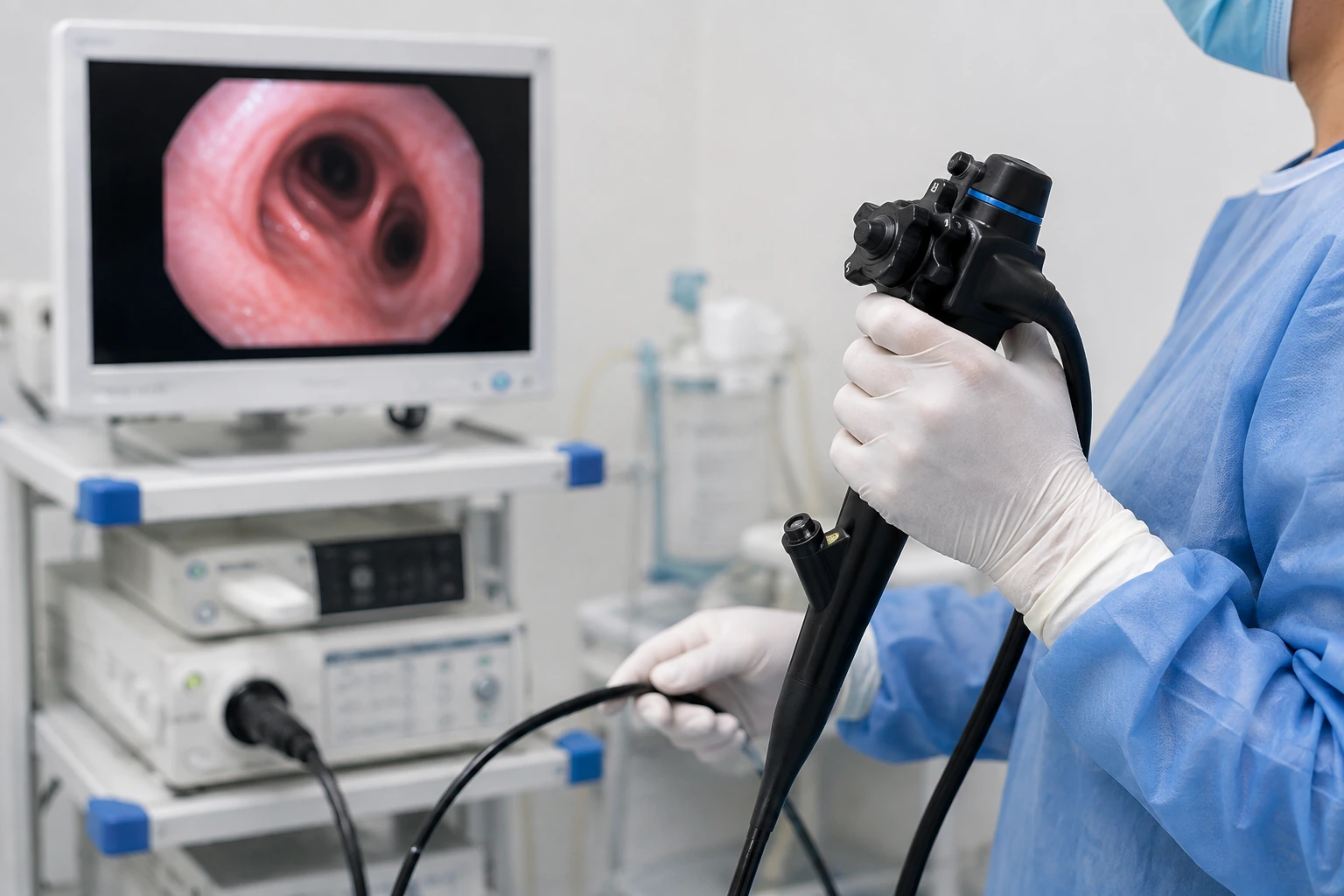
Why does bronchoscope use begin with configuration rather than insertion?
A bronchoscope is part of a system. Scope outer diameter, working-channel size, insertion length, angulation, suction, accessories, image platform and intended route must align with the procedure. Hospitals should start by defining the relevant pulmonary solution and compare configurations by use case rather than assuming one scope covers every department.
A frequent procurement mistake is maximizing one specification in isolation. A larger working channel may support stronger suction or selected instruments, but it can increase the scope’s outer diameter. A smaller profile may improve access in a constrained pathway, but may limit suction or accessory options. The buyer must balance these variables against the intended patient groups, airway device compatibility and clinical tasks.
What should the clinical team verify before use?
The pre-use check should follow the specific model’s instructions and the facility’s checklist. It normally covers device identity and intended use, packaging or reprocessing status, physical condition, image and illumination, controls, angulation, suction or working-channel function, compatible accessories, display connection, recording requirements and availability of backup equipment. Any abnormal resistance, damage, image failure or uncertain processing status should trigger removal from service according to local policy.
Pre-use bronchoscope system check
| Check area | Decision question | Common risk |
| Scope selection | Does the diameter, channel and length match the intended route, airway device and task? | Access, ventilation, suction or accessory incompatibility |
| Device condition | Is the scope intact and cleared for use under the applicable single-use or reusable workflow? | Damage, contamination or processing uncertainty |
| Image system | Are image, light, controls, display and recording functions ready? | Loss of orientation or delayed procedure |
| Channel and accessories | Are suction and required accessories compatible with this exact model? | Poor performance, obstruction or device damage |
| Clinical support | Are monitoring, oxygenation, assistance and complication-management resources ready? | A device problem becomes a patient-safety event |
How should the bronchoscope be handled during a procedure?
Supervised training should teach operators to coordinate the external hand position, insertion movement, distal-tip control and live image. Progress should remain deliberate and anatomy-oriented. If the view is lost, resistance is encountered, patient tolerance changes or the system behaves unexpectedly, the operator should stop and reassess under the local protocol rather than advance by force.
The working channel must be used only with compatible accessories and within the device’s intended use. Suction, sampling and therapeutic functions create different demands on channel size and workflow. When a bronchoscope is used through an endotracheal tube or another airway device, buyers and users must verify the exact diameter relationship and the clinical implications of the combined configuration. Compatibility must be documented, not guessed.
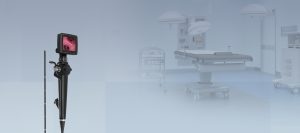
UE Medical lists both a single-use bronchoscope and a classic flexible videoscope. These represent different operational pathways. Selection should follow intended use, local authorization, model-specific documentation, procedure volume, availability requirements and the facility’s infection-prevention resources.
Which experience-based mistakes create avoidable risk?
- Choosing the scope after the patient arrives: a predefined model matrix reduces rushed diameter and accessory decisions.
- Assuming all monitors and accessories connect: connector, software, channel and instrument compatibility should be verified at model level.
- Testing the image but not the channel: a visible image does not confirm suction or accessory readiness.
- Using force when orientation is lost: loss of view or unexpected resistance requires reassessment, not blind advancement.
- Treating post-use processing as someone else’s task: reusable-device safety depends on a validated, traceable workflow completed exactly as specified.
- Comparing unit price instead of cost per available procedure: downtime, reprocessing labor, consumables, repairs, storage and emergency availability affect total cost.
- Buying one model for every use case: adult, pediatric, ICU, airway-management and pulmonary tasks may impose different configuration needs.
What changes after the bronchoscope is withdrawn?
The operator remains responsible for completing the clinical handover, checking that the planned task and patient assessment are complete, documenting relevant findings and device issues, and routing the device correctly. A single-use scope follows its specified disposal pathway. A reusable scope must enter the manufacturer-specified cleaning and high-level disinfection or sterilization workflow without shortcuts, with traceability under facility policy.
Reprocessing is not interchangeable across products. Procurement teams should request the current instructions, identify required equipment and chemicals, map turnaround time, assign staff responsibilities and confirm that the facility can execute every step. If this cannot be demonstrated, a low reusable purchase price may conceal significant operational and infection-control risk.
Scenario: Standardizing bronchoscopes across ICU and pulmonary teams
Business Background: A regional hospital is building a shared bronchoscopy service for pulmonary procedures and selected ICU airway applications.
Problem: The tender compares scopes mainly by image resolution and unit price. ICU clinicians need rapid availability, while the pulmonary team needs channel and accessory choices for a broader procedure mix.
Cause: The RFQ treats “bronchoscope” as one configuration and does not separate use cases, compatible airway devices, reprocessing capacity or display workflow.
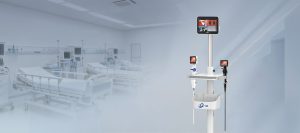
Solution: The hospital creates a use-case matrix, verifies model-level scope and accessory compatibility, trials each proposed configuration in supervised simulation, and calculates cost per available procedure. It also assesses whether a shared bronchoscopy workstation fits the required imaging and department workflow.
How should buyers compare bronchoscope configurations?
Procurement decision matrix
| Decision factor | Evidence to verify | Hidden cost or risk |
| Clinical scope | Intended uses, patient groups and department-specific model matrix | Off-label assumptions or gaps in coverage |
| Physical compatibility | Outer diameter, channel, length, airway-device and accessory compatibility | Restricted access, inadequate function or unusable accessories |
| Platform compatibility | Display, connector, software, recording and cart requirements | Extra capital equipment and fragmented workflows |
| Infection control | Single-use pathway or validated reusable processing instructions | Turnaround, labor, consumables, traceability and contamination risk |
| Service continuity | Stock plan, backup units, fault reporting, service and training support | Cancelled or delayed procedures |
| Total cost | Acquisition, consumables, processing, repair, downtime and disposal | A low unit price may produce a higher cost per available procedure |
For a broader review of available visualization technologies, buyers can start with UE Medical’s endoscope product category and then narrow the model set to the documented clinical and operational requirements.
Frequently asked questions
Can a person learn how to use a bronchoscope from an article or video?
No. Educational content can explain the workflow and equipment logic, but competence requires formal instruction, supervised simulation, supervised clinical use and assessment under local requirements.
What is the first equipment decision before bronchoscope use?
Define the intended task and route, then select a model whose outer diameter, working channel, length, platform and accessories are documented as suitable for that use.
Why is the working channel important?
It affects suction and accessory capability. However, it must be balanced against the scope’s outer diameter and the constraints of the intended pathway.
Can any bronchoscope be passed through any endotracheal tube?
No. Verify the exact scope and tube dimensions and follow the applicable instructions and clinical protocol. Nominal sizes alone do not replace a model-level compatibility review.
When should a bronchoscope be removed from service?
Follow the device instructions and local policy. Physical damage, abnormal control response, image problems, channel failure or uncertain processing status should trigger appropriate quarantine and evaluation.
Are single-use bronchoscopes automatically the right choice for every department?
No. They can simplify availability and post-use handling, but clinical fit, model range, image platform, consumable supply, waste and total cost still require evaluation.
What should a distributor request from a bronchoscope manufacturer?
Request the model matrix, intended-use and market documentation, technical specifications, accessory and monitor compatibility, single-use or reprocessing instructions, shelf-life information where applicable, training materials and post-market support process.
Request a bronchoscope configuration review
Provide the target departments, intended procedures, patient groups, existing airway devices and monitors, required working-channel functions, expected procedure volume, preference for single-use or reusable workflow, infection-control resources and destination market. UE Medical can help organize a model and platform comparison for technical and procurement review. Send the requirements through the UE Medical contact page.
-
 Bronchoscopy Simulation: What Should Training Systems Measure?September 23, 2026
-
How Much Does a Video Laryngoscope Cost? Key Price Factors for Hospital BuyersSeptember 28, 2026
-
How AI Can Support Structured Bronchoscopy Training for CliniciansSeptember 23, 2026
-
How to Compare Single-Use Bronchoscope Configurations for Hospital ProcurementSeptember 18, 2026


 Room 3301, Sunon Central Business Building,
No. 200 Citizen Street, Shangcheng District, Hangzhou, Zhejiang, 310020, China
 +86 755 8977-4077