




What Should Buyers Check Before Specifying a Flexible Intubation Video Endoscope?
 August 21, 2026
 645


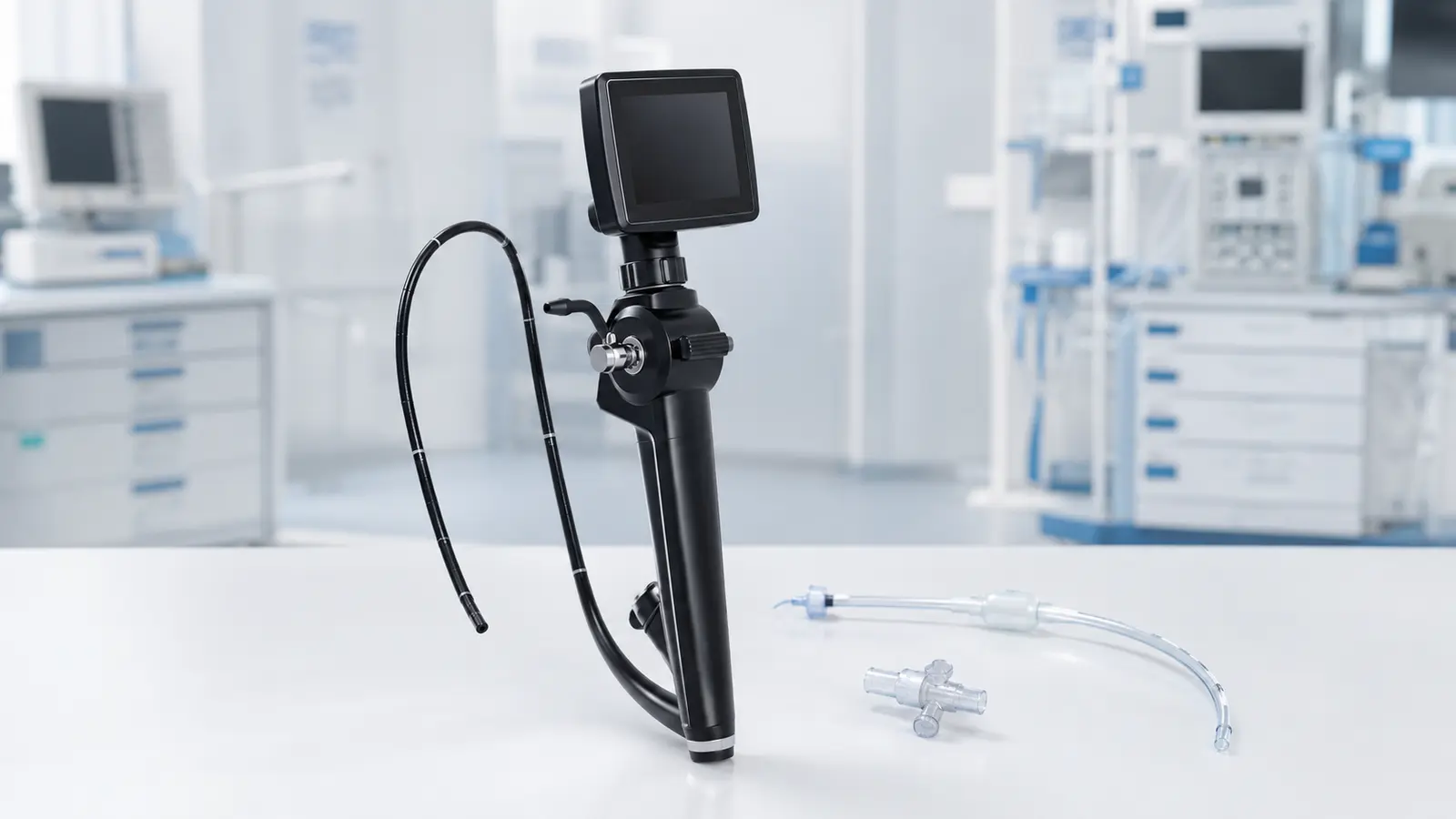
Direct Answer: A flexible intubation video endoscope should be specified around the intended airway route, patient range, insertion-tube dimensions, working-channel and suction needs, image workflow, infection-control model, and accessory compatibility. Buyers should confirm these variables against the hospital’s actual protocol and request model-specific evidence before comparing quotations, because a clear image alone does not establish procedural fit.
A procurement team is rarely choosing a camera in isolation. It is choosing a complete working arrangement for anesthesia, emergency airway management, ICU use, or another defined clinical pathway. A scope that appears suitable in a demonstration may still create problems if the insertion section does not match the intended route, the working channel does not support the planned task, or the display cannot be integrated into the department’s normal setup.
The first useful step is to separate the clinical requirement from the product name. The phrase flexible intubation video endoscope is used broadly in requests for quotation, but suppliers may interpret it differently. Some buyers mean a flexible videoscope designed to guide tracheal intubation. Others may be looking for a flexible ENT scope, a bronchoscope, or a system that can support both visualization and suction. A precise RFQ prevents these categories from being treated as interchangeable.
Which clinical pathway should define the specification?
Start with the route, anatomy, and intended task. A scope selected for oral intubation support is not automatically the right choice for an ENT examination or lower-airway procedure. The department should state whether the device is expected to support planned intubation, difficult-airway readiness, bedside use, oral examination, suction, or a combination of tasks. If several departments will share the equipment, list each workflow separately instead of using the phrase “multi-purpose” as a substitute for requirements.
UE Medical groups relevant devices within its flexible videoscope range. That category is a useful starting point, but the buyer still needs to map each proposed model to the requested clinical pathway. Product-family membership does not prove that every insertion tube, channel, monitor, or accessory option fits every application.
A practical requirement statement should answer four questions before a quotation is requested:
- Which department will own the device and where will it be stored?
- Which route and patient groups are within the intended use defined by the project?
- Is visualization alone required, or must the device support suction or another channel-dependent task?
- Will the scope be used with an integrated display, a separate monitor, or a workstation?
How should buyers verify insertion and tube compatibility?
Scope diameter should never be reviewed as an isolated catalog number. The procurement team should confirm the proposed insertion-tube size against the planned route, the compatible airway tube range, and the clearance needed for smooth advancement. A technically usable combination can still be operationally awkward when the fit is too tight, the tube cannot pass the relevant section comfortably, or the final assembly restricts handling.
Ask the supplier for a model-by-model compatibility statement rather than a generic declaration that the scope is “suitable for intubation.” The statement should identify the offered scope, compatible accessories, applicable tube range, and any limitations. If the hospital uses several airway tube families, provide the actual references or dimensional information during the RFQ stage. This is more reliable than assuming that nominal sizes from different suppliers behave identically.
Another frequent mistake is approving the handheld unit while leaving the insertion section unspecified. The tender may name a display size and image function yet omit insertion-tube diameter, working length, distal-end design, and deflection requirement. That creates room for quotations that look comparable but represent different clinical capability.
When does a working channel become a deciding factor?
A working channel matters when the intended workflow includes suction or another supported channel-based function. The buyer should confirm channel dimensions, connection requirements, expected suction arrangement, and the accessories included in the quoted package. A larger channel may support the intended task more effectively, but it can also influence the overall insertion profile. The correct balance depends on the clinical pathway rather than on selecting the largest available number.
UE Medical describes its Classic Flexible Videoscope as supporting oral examination or treatment and guiding tracheal intubation while suction is performed. Procurement teams considering that workflow should still confirm the exact offered model, scope dimensions, supplied connectors, and approved cleaning pathway in the final quotation. Product-page language should begin the technical discussion, not replace a signed configuration sheet.
Quotations also need a clear boundary between standard supply and optional accessories. If a suction connector, leak-test item, storage support, transport case, monitor cable, or compatible display is required for normal use, the commercial comparison should show whether it is included. A lower unit price can conceal a package that is incomplete for deployment.
What image and display questions belong in the RFQ?

Image quality should be assessed as a complete chain: distal imaging, illumination, display, connection method, image output, and the environment in which the device will be viewed. A specification such as resolution has limited value unless the buyer knows which monitor and connection are used during evaluation. The same scope can feel very different on a compact integrated display and on a larger external screen.
The Flexible Video Laryngoscope page, for example, describes a rotatable display and wired connection to a workstation image processor. A buyer evaluating this route should ask whether the quoted configuration includes the required display, processor, cable, and mounting arrangement. The RFQ should also state whether image capture, review, or external viewing is necessary; those functions should not be inferred from the word “video.”
A useful acceptance test uses the exact quoted configuration. It should check image stability, articulation response, cable security, display visibility from expected operator positions, and correct operation after the cleaning or setup steps applicable to the device. A showroom demonstration with a different monitor or accessory set is not equivalent evidence.
Should the project choose a reusable or single-use pathway?
The choice is operational, not simply a unit-price comparison. A reusable scope requires a validated reprocessing workflow, trained staff, compatible cleaning resources, storage discipline, inspection between uses, and a plan for downtime or repair. A single-use pathway changes the calculation toward per-procedure supply, sterile-pack storage, waste handling, expiry management, and availability during unexpected demand.
Buyers should calculate the cost and risk of the complete pathway. For reusable equipment, include the supporting reprocessing process and the number of scopes needed to maintain availability. For single-use equipment, include compatible display hardware, recurring inventory, storage, and local disposal requirements. Neither route is automatically cheaper or safer in every hospital. Procedure volume, turnaround time, infection-control policy, staffing, and emergency coverage decide the better fit.
| Decision area | Evidence to request | Procurement risk if omitted |
| Clinical route and intended task | Model-specific intended-use and application statement | A scope category is purchased for the wrong anatomy or workflow |
| Insertion and airway-tube fit | Insertion dimensions and a compatibility matrix for the buyer’s tube range | Restricted passage, awkward handling, or incomplete usable range |
| Working channel and suction | Channel dimensions, connector details, and included accessories | The delivered package cannot support the planned function |
| Display workflow | Complete connection diagram and list of included display components | Unexpected monitor, processor, cable, or mounting costs |
| Infection-control pathway | Reprocessing instructions or sterile single-use documentation, as applicable | The device cannot enter the hospital’s approved workflow |
| Service and continuity | Training scope, support boundary, spare strategy, and response process | Extended downtime or inconsistent use after deployment |
What supplier evidence should be reviewed before approval?
A complete evaluation file should connect the supplier’s claim to model-specific evidence. Request the current product specification, configuration list, instructions for use, applicable regulatory documents for the destination market, packaging information, and a list of included and optional accessories. Any certificate should be checked for product identity, model coverage, issuing body, validity, and market relevance rather than accepted because a logo appears in a brochure.
Service responsibility also needs to be written down. Clarify who provides user orientation, technical support, troubleshooting, repair coordination, and replacement accessories. The available user service and support information can help buyers frame this discussion, but project-specific responsibilities should appear in the commercial agreement.
For sample evaluation, record the exact model and accessories tested. A favorable evaluation does not transfer automatically to another diameter, channel, display, or software configuration. The purchase order should preserve the approved configuration and require notification before substitutions. This simple change-control step prevents a sample-to-delivery mismatch that may otherwise be discovered only during acceptance.
Representative Scenario — Not a Claimed Customer Case
Business Background: A regional hospital plans to equip anesthesia and ICU teams with one shared flexible visualization platform.
Problem: The initial RFQ asks for a “portable flexible intubation video endoscope” but lists only screen size and image clarity.
Cause: The RFQ does not define airway-tube compatibility, suction need, reprocessing route, display sharing, or the number of devices required to cover turnaround time.
Solution: The procurement team separates the anesthesia and ICU workflows, supplies the intended tube range, confirms whether suction is required, identifies the hospital’s reprocessing capacity, and asks each bidder for a complete configuration and compatibility matrix.
Buyer Decision Value: The revised RFQ turns an image-device comparison into a deployment comparison. Suppliers can quote the same functional boundary, and the hospital can test the exact package it intends to purchase.
What should the final RFQ contain?
The RFQ should name the department, intended clinical pathway, patient range, route, required scope dimensions, articulation expectation, channel and suction requirement, display method, infection-control model, accessory list, documentation, training, service, packaging, and acceptance process. Where a requirement remains open, label it as an option and ask suppliers to explain the trade-off instead of choosing silently.
Include a configuration table with one row per quoted model. Require bidders to mark each item as included, optional, unavailable, or subject to confirmation. Ask for deviations in a separate list. This structure makes it easier to distinguish a genuine technical difference from a missing accessory or an unclear commercial boundary.
If the project team is comparing flexible-airway configurations, send the intended route, airway-tube range, suction requirement, display arrangement, and reprocessing preference through the UE Medical contact page. Those inputs allow a supplier response to address the actual workflow instead of returning a generic catalog quotation.
Frequently Asked Questions
Is a flexible intubation video endoscope the same as a bronchoscope?
Not necessarily. The phrase may describe a flexible scope used to support intubation, while a bronchoscope is designed for tracheobronchial visualization and related pulmonary tasks. Buyers should specify anatomy, route, channel need, and intended use rather than treating the names as equivalents.
Which specification should be checked first?
Check the intended clinical pathway first. Insertion dimensions, working channel, display, and infection-control model only become meaningful after the buyer defines where, how, and by whom the device will be used.
Why is airway-tube compatibility important?
The scope and airway tube must function as an assembly during the intended workflow. Nominal sizes alone may not describe practical clearance, handling, and accessory interaction, so the actual tube range should be included in the compatibility review.
Does better image resolution guarantee a better procurement choice?
No. Image performance matters, but the complete decision also includes maneuverability, insertion profile, channel function, display integration, cleaning or single-use workflow, service, and availability in the intended department.
What should be included in a sample evaluation?
Evaluate the exact quoted model with its proposed display, connectors, accessories, and applicable setup or reprocessing steps. Record the configuration and use the same record during purchase-order and delivery inspection.
How should buyers compare reusable and single-use options?
Compare the complete operating pathway. Reusable systems involve reprocessing capacity, turnaround, inspection, repair, and backup availability. Single-use systems involve per-procedure inventory, sterile storage, expiry control, compatible displays, waste handling, and recurring supply.
What information should be sent with an inquiry?
Provide the department, intended route and task, patient range, airway-tube information, suction need, display preference, infection-control model, quantity, destination market, documentation request, and expected acceptance process.
-
 Bronchoscopy Simulation: What Should Training Systems Measure?September 23, 2026
-
How Much Does a Video Laryngoscope Cost? Key Price Factors for Hospital BuyersSeptember 28, 2026
-
How AI Can Support Structured Bronchoscopy Training for CliniciansSeptember 23, 2026
-
How to Compare Single-Use Bronchoscope Configurations for Hospital ProcurementSeptember 18, 2026


 Room 3301, Sunon Central Business Building,
No. 200 Citizen Street, Shangcheng District, Hangzhou, Zhejiang, 310020, China
 +86 755 8977-4077